
Goal:
Securing the future of Mali’s “desert elephants” through community-based measures to provide lasting protection of key dry season and migration habitats, reduce human-elephant conflict, and deter poaching.

Conservation Value:
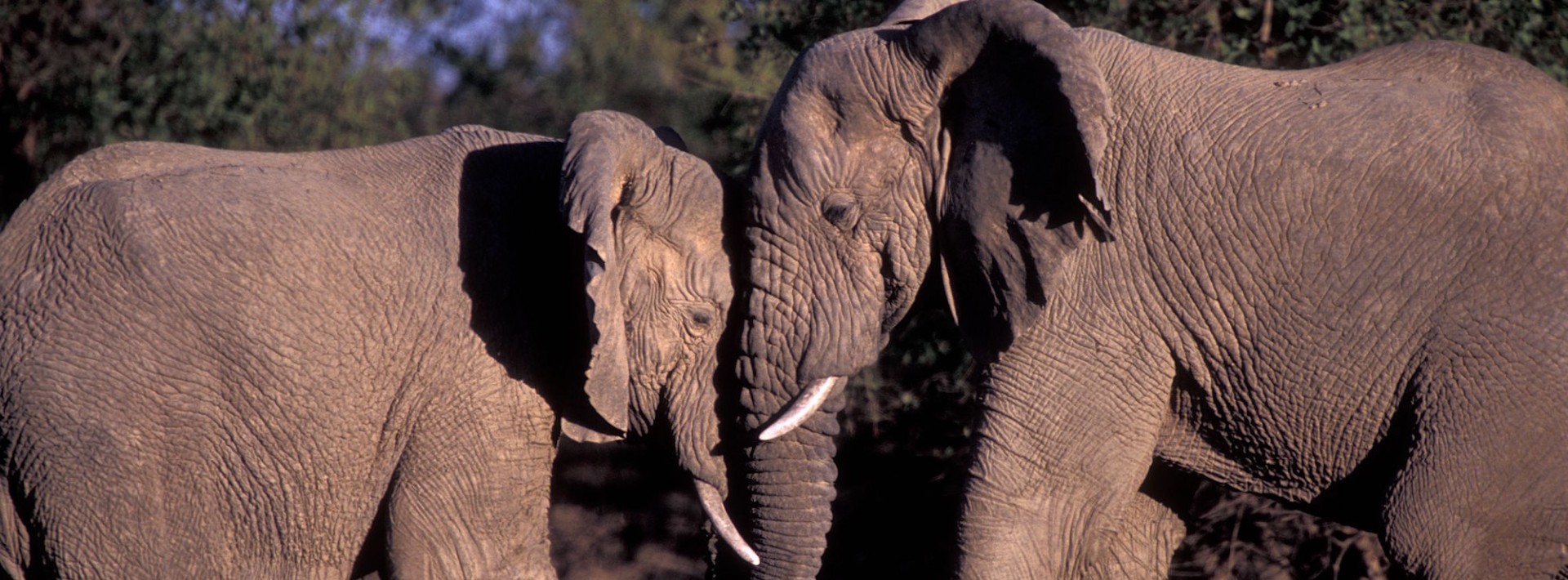
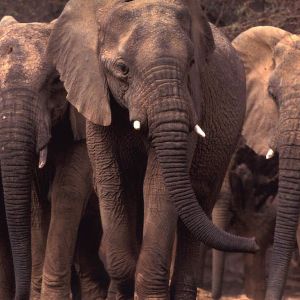
Mali’s “desert elephants” are the northernmost population of elephants, one of just two elephant populations adapted for deserts, and undertake the longest elephant migration in the world. To cope with the widely dispersed and variable nature of the region’s water and food resources, the population has evolved a unique nomadic strategy that includes a migration spanning over 3 million hectares. Dr. Susan Canney, and our local team have pioneered an approach to community-based natural resource management that is succeeding in protecting natural resources for elephants and people.
See project director Dr. Susan Canney’s very readable account of the project’s history.
International recognition for the Mali Elephant Landscapes project
- 2013 Condé Nast Environmental Prize
- 2016 Disney Conservation Hero Award for Nomba Ganamé, Field Director
- 2017 Equator Award (UNDP)
- 2024 Tusk Prince William Award for Conservation in Africa to Nomba Ganamé, Field Director
- 2025 SSIG Award of Excellence to Susan Canney – conservation in the Sahel & Sahara
Threats:
Key habitats, including critical food and water resources, have been degraded or remain under increasing threat, placing the long-term viability of the population at risk. Since 2015, poaching has re-emerged as a significant pressure, while the presence of armed groups has created additional security and operational challenges to which the project has had to adapt.
Actions & Results:
This project has meant the survival of Mali’s elephants. It involves working with communities to formulate community conventions (local laws developed through consensus) to protect habitat and govern pastoral reserves, water resources. These have standing under national law. Our actions have succeeded in stabilizing this fragile population of elephants and improving livelihoods.
Achievements:
- Our community based natural resource management established with 17 communes has protected natural habitat, benefitting humans and wildlife within a 6-million-hectare landscape
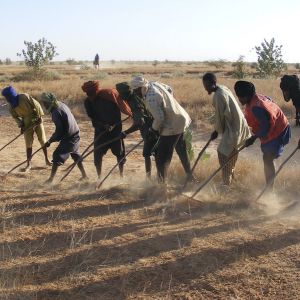
- In 2025, the project employed 1,472 ecoguards, up from 46 individuals in 2011, providing a respected occupation for youth. They are involved in monitoring and creating firebreaks each year (2,297 km in 2024)
- 473 elephants were counted 2025 (up from 316 in 2023) in a systematic survey involving our ecoguards
- Working with the government led to the creation of the Gourma Biosphere Reserve (4.2 million hectares) in 2021
- 170,901 hectares of community-designated protected areas have been established
- Poaching was held to a very low level until 2015, when it accelerated. The project spurred the creation of an Anti-Poaching Unit for Mali (trained in enlightened, community-friendly methods by Chengeta Wildlife) that has reduced elephant poaching to a very low level.
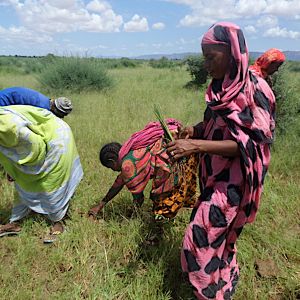
- At last count, the project has led to 179,237 people benefiting directly from income earning activities led by women, including the creation of non-timber forest product harvest zones and the establishment of a community shop and cooperative livestock fattening schemes.
- In 2024, 148 community initiatives were funded in support of natural-resource management and livelihoods.
- The project has been effective in reducing human-elephant conflict through engaging the whole community in understanding the conflict in its wider context and identifying appropriate actions.
Location:
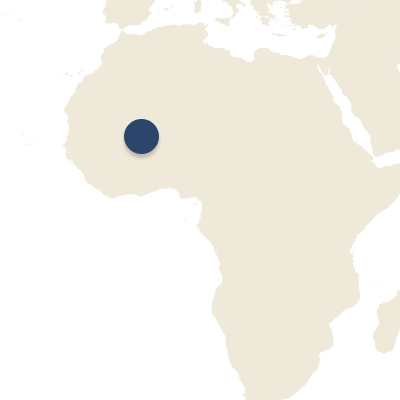
The Gourma region of Mali (west Africa). See map in “In More Depth” section, below.
Size of Area Involved:
42,000 km2 (Similar in size to Wood Buffalo National Park, Canada’s largest national park and one of the largest in the world.)
Project Field Partner:
Project director Susan Canney and Field Manager Nomba Ganamé.
Chengeta Wildlife provided expert training and leadership for the anti-poaching unit.
Our Investment to Date:
Cost to Biome Conservation (2010-2024): CA$4,267,135
(ongoing in 2026 – support needed!)
Dr. Susan Canney founded this project with WILD Foundation in 2007, with Biome coming on board in 2010. We are grateful for past or ongoing support from the EU, the Global Environment Facility, Tusk Trust, UN Trust Fund (MINUSMA), the Canadian and UK governments, UK Illegal Wildlife Trade Challenge Fund and USFWS African Elephant Fund.
Gallery
In More Depth...
Program Partners and Personnel
Key personnel for this program are Project Leader Dr. Susan Canney of Oxford, U.K., and our team in Mali.
The WILD Foundation (WILD) began working in the Gourma area of Mali since 2003, and with Save the Elephants studied the Gourma elephants and their range, migrations and conservation needs.
Biome joined forces in 2010 and is the lead funder for this project. Other funders are/have been: the Governments of Mali and the USA (which funded boreholes and cisterns at the relocation site for the Banzena community); the US Fish and Wildlife Service; the UK government’s Darwin Initiative; the Abraham Foundation; SOS Fund; The Tusk Trust; Woodtiger Foundation, the Elephant Crisis Fund, MINUSMA (UN Multidimensional Integrated Stabilization Mission in Mal) and others.
Background: a most unusual elephant population
Elephants once occupied a largely continuous range across West Africa, from the coastal forests to the Sahara, but are now restricted to small, fragmented and geographically isolated populations, over half of which contain fewer than 100 individuals. Numbering an estimated 350-700 individuals in 2004-2005, the desert elephants inhabiting the Gourma region of Mali are a notable remnant population. Possibly because of the tolerance of local people, the isolation of the region, and their small, low-quality tusks, this population largely escaped the rampant poaching that extirpated populations across the Sahel in the 1980s. The largest population in West Africa, they are accorded high priority in the World Conservation Union’s regional elephant strategy.
To cope with the widely dispersed and variable nature of the Gourma’s resources, the population has evolved a unique nomadic strategy that includes a migration circuit of around 600 km. They range broadly throughout the year from the bend of the Niger River in Mali during the dry season, southward to the border region with Burkina Faso during the wet season.
Elephants historically lived in relative harmony with the peoples of the Gourma, but the recent trend of reduced rainfall, along with the spread of agriculture, ranching, settled human communities and water development programs have changed the relationship between elephants, humans and the Sahelian ecosystem. Humans and elephants are now competing more for the same land, crops and water resources.
In the last months of the dry season the population was dependent on two large lakes — Gossi and Banzena. Settlement around Lake Gossi in the 1980s ended its use by elephant herds. More recently, Lake Banzena has come under pressure from transient cattle herders and a new settlement of several hundred people who moved to the area following the installation of a well.
In the 2000s, studies detailed the migration and ecology of the Gourma elephant population1 and elephant-human conflicts at Lake Banzena2. A surprise finding, for example, was that 96% of the cattle using Banzena belonged to “prestige herds” owned by wealthy urban-dwellers. A key conclusion of the studies was that Lake Banzena had to be freed from human use to ensure its continuance as critical habitat for elephants. This has been a key achievement of this project.
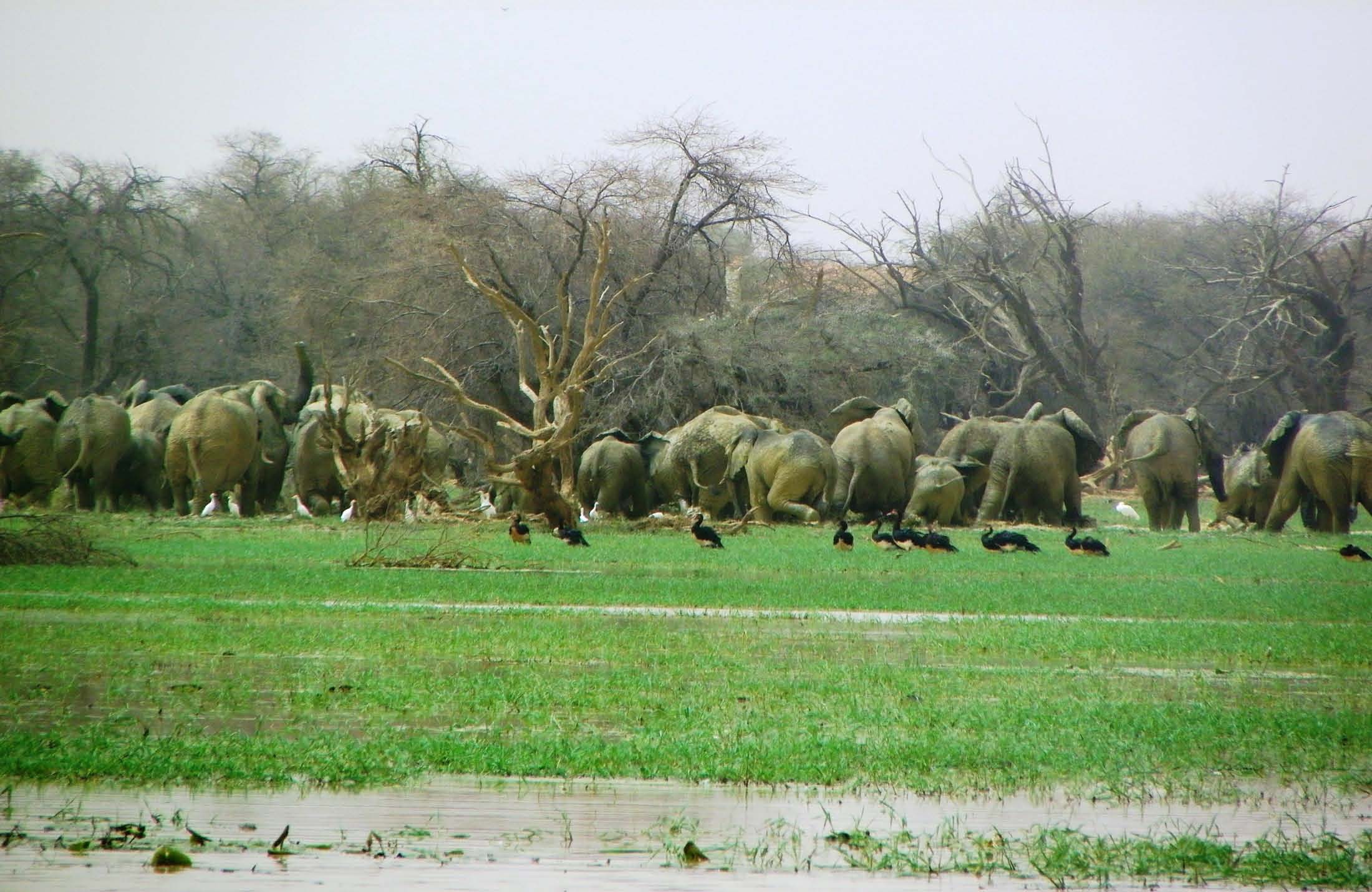
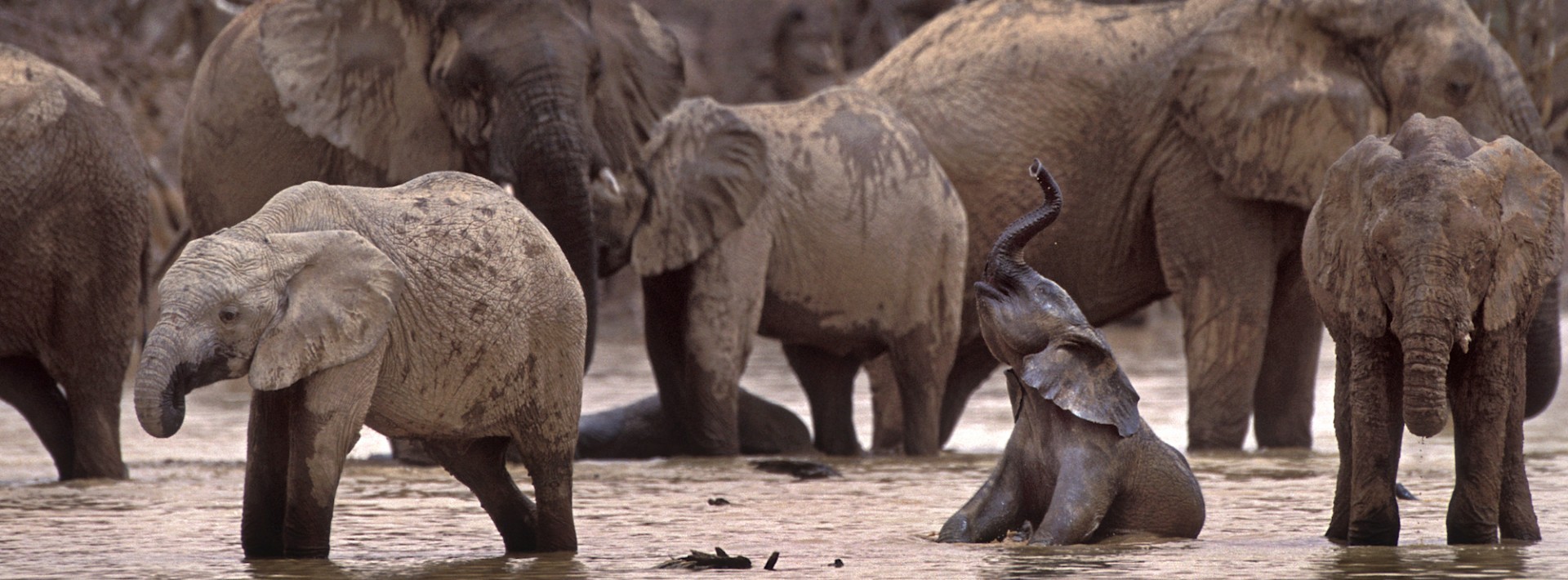
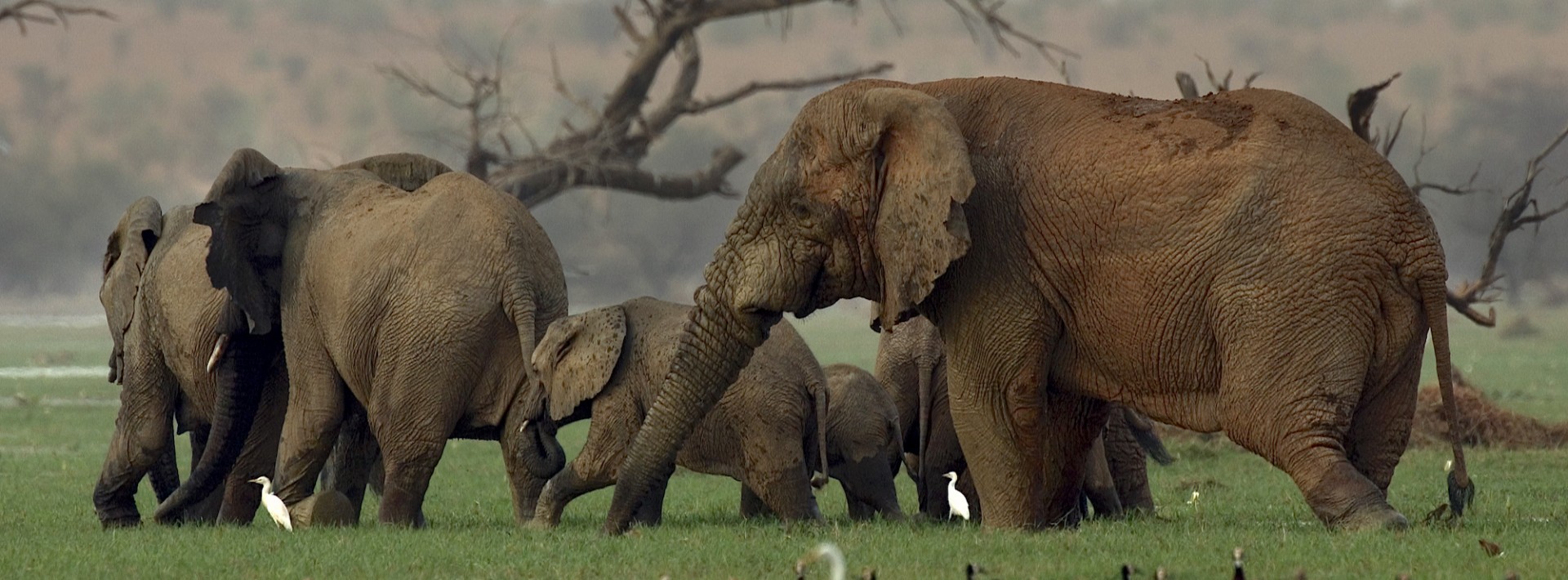
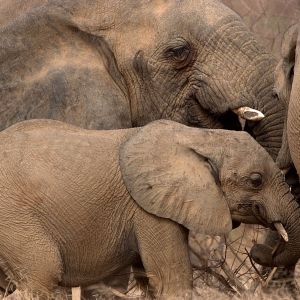
Elephants at Lake Banzena. (photo: Nomba Ganame)
Map of project area

Mali Elephant Project location
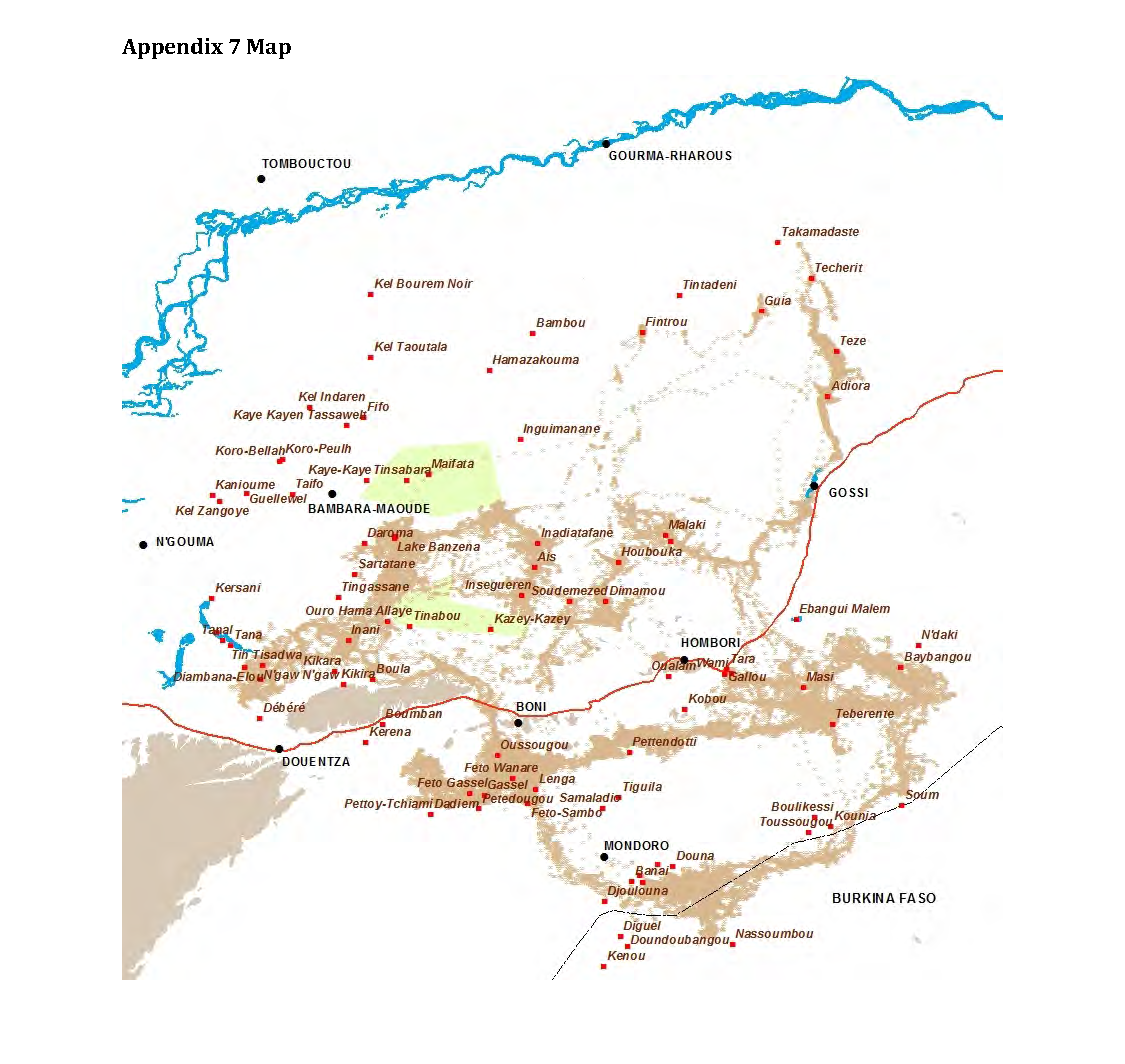
Range of Mali elephants
Actions and Results
The project entails crucial actions to protect key habitats for elephants of the Gourma region of Mali, including:
- freeing Lake Banzena (critical habitat late in the dry season) from human use through (a) voluntary relocation of a small resident community and (b) discontinuing access by transient cattle herders;
- establishing community and inter-communal conventions (local laws) to protect habitat for elephants and improve natural resource management for people;
- participation in planning and meetings with government to encourage regional land use that is compatible with elephant needs;
- educational outreach.
Additional priorities in the post-conflict period have been to:
- Support community reconciliation at the grass roots level;
- Increase anti-poaching activities;
- Protect natural resources in key strategic places, while maintaining the morale of our existing community partners.
Freeing Lake Banzena from human use
One of the first priorities for this project was relocating the recent human settlement at Lake Banzena. The settlers were agreeable to relocating to an area of suitable pasture if water infrastructure could be provided there. The relocation was completed, along with provision of water and training for managing water and pasture resources at the new site. In addition to improving water levels in the lake for the elephants, the relocation provided a cleaner drinking water supply, with the families at the new site reporting that stomachaches ceased since drinking water from the pump. A new forestry post was established at Banzena for monitoring the area.
Update: Unfortunately, during the lawless period of conflict in the region, the boreholes were senselessly sabotaged and a bridge and dam were destroyed at a critical section of the Gossi river. The breach of this dam drained water from the lake and also from lakes in the drainage to the north, vastly reducing the area available for use by herders from the river to the north. Combined with poor rains in 2013, this increased pressure on resources and potential conflict between communities and with elephants. Biome has provided support for timely repairs of the boreholes, but since then, theft of solar panels powering the borehole pump ended the supply of clean water, with the result of people moving back to Lake Banzena. We are addressing this situation.
Governance and Management of Elephant Reserve and Pastoral Reserve
The project has advanced elephant conservation through community and inter-communal conventions that designate areas as protected elephant habitat, establish rules for what activities are allowed and not allowed along the elephants’ migration path, and put in place community structures for monitoring and enforcement. These local agreements have formal state recognition and the force of law. As project leader Dr. Susan Canney explains, they are “the core part of the social process at work”.
Two key tools have emerged that make our approach innovative and workable:
- The designation by the local community of their new lands as sylvo-pastoral reserves, creating a legal mechanism by which the community can regulate resource use in its area of influence;
In protecting grazing areas, the pastoral reserves enable herders to feed their animals using a smaller range, reducing the impact on natural habitats. Feedback from the community on this system has been very positive:
“We never realized that we could protect our pastures to provide enough food for our animals as well as the elephants in an area frequented by so many herders. And yet we have done this in only two years.” — Malian herder
Another threat to habitat is what we term “abusive tree cutting”, which is the cutting of branches from living trees to provide forage for livestock. Local communities understand that this activity is unsustainable but need a level playing field in which no one is allowed to do it. The project helps bring this about by supporting the formulation of transparent and equitable local conventions (agreements) that include local systems to enforce the rules.
Fire-breaks in the Gourma
The following slide show was modified from a presentation by Dr. Susan Canney, who remarks:
Every year the Gourma loses much of its resources in pasture and forage to bush fires which sweep through the grassy areas during the dry season when the grass is tinder dry. These are generally caused accidentally from activities such as tea-making, or smoking, but in the south, agriculturalists may start them in order to prevent the transhumant cattle herds from staying in their area.
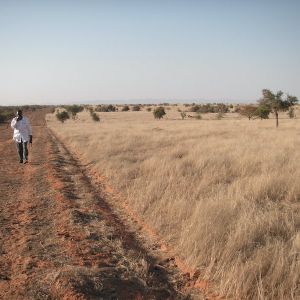
A pastoral reserve was created to ensure that there is pasture through the dry season, but it needs to be protected by fire breaks. These take a good deal of effort to construct but are very effective if done properly. They also require a great deal of community organization to bring differing clans and ethnicities to work together. Supporting this activity is a good way to instantly increase the amount of natural resources available to the population. Each year, hundreds of kilometers of firebreaks are created.
Education and Outreach with Surrounding Communities and Government
Another aspect of the project is education and raising public awareness about the changes and the reasons for them. Biome has supported community outreach activities including:
- Customized messages for radio broadcast that advertised the planned end to the provision of well water at Lake Banzena; and
- Educational workshops and meetings related to elephants, ecology and conservation, preparing the groundwork for elephant management planning.
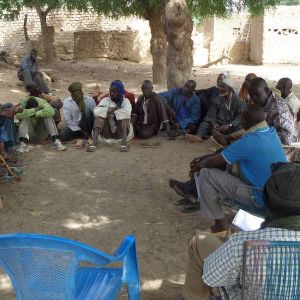
The project has facilitated meetings in which communities assemble to collaborate on protection of elephants and their migration route, and to resolve conflicts between herders, farmers, and elephants. Outreach with various levels of government has allowed us to engage in wider planning processes to protect elephant habitat.
We have aimed to support community reconciliation at the grassroots. In the past, well-intentioned aid and reconstruction has created worse conditions over the long term for the environment and for the elephants. For this reason, the idea of a national workshop was born. Held in 2014, the workshop was attended by representatives of all levels of government and enabled a frank and open exchange of information. The resulting recommendations were taken to the donor community.
Anti-poaching Initiatives
Our anti-poaching approach has protected the elephants and secured other key natural resources while empowering local communities. These efforts have continued despite lawlessness and a proliferation of firearms. Following a surge in poaching early in 2015, we mobilized significant support to organize patrols. Poaching has been drastically reduced.
Assessment
This project is succeeding. Malians take pride in their elephants and have proved receptive to measures to accommodate their needs. Communities are enthusiastic partners in the process. The foundations of an approach are being established that can be adapted and replicated throughout the elephant range and beyond.

Similar Projects
Deploying strategic security and technology to save rhinos
Find Out More