
FAQs
Biome: Why and Where?
Why Biome?
We chose the name Biome because it better reflects the breadth and ambition of our work. A “biome” represents large, interconnected ecosystems – just like the global conservation impact we aim to make. This new name helps us communicate our mission more clearly and connect with broader audiences, while still holding true to the roots of the International Conservation Fund of Canada (ICFC)
Does the new name mean new leadership or a new direction?
No, it does not. Our team, field partners, and work remain the same. The new name, Biome Conservation, reflects the growth and evolution of our work, but it does not change who we are or the values we stand for. We remain fully committed to our goals and to continuing the conservation efforts you’ve supported.
Why does your work matter?
Because nature matters. It has profound intrinsic value. And natural ecosystems and processes are essential to human wellbeing. Yet the world is losing tropical ecosystems and biodiversity on a massive scale. Mechanisms to pay for the “ecosystem services” provided by nature make great sense but are not developing fast enough to solve the problem. Conservationists the world over are stepping up to protect irreplaceable natural ecosystems for the long term. That’s what ICFC does.
But here’s a different answer. Watch (in full-screen mode) this video, an intimate look at the life of the spoon-billed sandpiper on its Russian breeding grounds. This species is Critically Endangered. Watch it and ask yourself:
- Does it matter if this species disappears forever?
- Should we let that happen?
- Or should we take action to prevent its extinction?
ICFC is taking action, and with your support we can expand our work to help this species and many more.
Why do we need Biome when there are many existing conservation organizations?
Before Biome was founded in 2007, Canada had no broad-scale international conservation organization, hence no easy way for Canadians to make tax deductible donations for global conservation priorities, although several Canadian charities undertake limited conservation-related work internationally. We do have good conservation NGOs and land trusts in Canada, but their programs are almost entirely carried out within Canada.
Why should Canadians support international conservation? Shouldn't we be supporting conservation at home in Canada?
We should be doing both. Here’s why we need to especially increase international efforts:
- Most of the loss of biodiversity and conversion of natural ecosystems is happening in tropical countries.
- Canada’s migratory birds are being affected by habitat loss in their wintering areas in Latin America. The populations of Canada’s bird species that winter in South America have declined by 53% on average from 1970 to 2010.
- Biological diversity is highly concentrated in the tropics.
- The shortfall in spending on conservation is far greater in developing countries.
- Canadians benefit directly and indirectly from natural ecosystems worldwide, for example in climate regulation. See our Conservation Fast Facts.
- Loss of biodiversity is not inevitable! We can prevent many extinctions at modest cost.
- The world’s natural heritage belongs to everyone. The world has a stake in our polar bears and boreal forest and we have a stake in penguins and rainforests of the Amazon and Congo Basin. Canada is an affluent country that generates its wealth as an integrated part of the world economy, and we can easily supplement the limited resources developing nations have to achieve highly desirable conservation goals.
Where do you work?
Latin America, South and Southeast Asia and Africa. Our priorities are areas of rich biodiversity and/or extensive wilderness where opportunities exist for achieving long-term conservation gains.
Biome expenditures and modus operandi
What are your expenditures on programs, versus administration and fundraising?
In 2021, program spending made up 93% of all spending. But note that all adminstrative costs now and in the foreseeable future are covered by a core group of committed supporters. Core support also covers some of our long-term programs. Your support therefore goes entirely to programs.
Why is the Biome staff small in relation to all you're doing?
Biome works with local field partners who carry out program activities based on work plans and budgets that we develop together. We are thus able to stay lean and flexible, picking and choosing the best current conservation opportunities and taking advantage of the experience, track record, and local expertise of good field partners.
Programs
How do you decide what projects to support?
After applying our selection criteria, we assess which opportunities offer the best value for money in terms of lasting conservation gains, while factoring in risk. We consider conservation significance (presence of threatened and endemic species, threatened ecosystems, ecosystem services, long-term ecological sustainability, and the broader conservation context); the severity of threats; expected project outcomes; and risk. We also evaluate the local field partner who will implement the project on the ground.
What kind of projects do you do?
We engage in direct conservation action rather than research or what are called “integrated conservation and development projects”. Projects can involve:
- Protecting and managing nature reserves;
- Supporing indigenous people in protecting their lands and their traditional way of life;
- Protecting critical habitat by (1) adding protected status in various ways and (2) supporting community-based protection and management;
- Increasing awareness of local communities of the needs of their local wildlife (particularly threatened species);
- Acquiring land for conservation.
What kind of oversight of projects do you do?
We work closely with local partners who carry out the field activities of a project, though with a few projects we have some direct involvement (notably the Kayapo Project). Biome reviews work plans and budgets proposed by field partners, making adjustments as needed. We maintain financial records and ensure that project expenses, activities and outcomes are well documented. We also make site visits to further evaluate the project and to understand it better. We share what we learn among our various collaborating organizations.
What kind of followup of projects do you do?
Some of our programs are long-term efforts and these are monitored on an ongoing basis. We follow up on short-term projects through various means including site visits, communications with project partners, and independent evaluations. We like to share followup and monitoring with co-funders.
Donations to Biome
Is my donation tax-deductible in Canada?
Yes. Biome (International Conservation Fund of Canada) is a registered Canadian charity (# 852 478 189 RR0001). We will issue to a tax receipt for income tax purposes.
Is my donation tax-deductible in the United States?
Yes, please see our page for our American supporters.
Can my donation be earmarked for a particular project?
For most projects, yes (those with a “Support this project” button (other projects are fully funded). If making a large restricted donation it’s a good idea to discuss this with us beforehand.
What do you do with unrestricted donations?
We apply 100% to the projects considered most urgent at the time.
Do you accept donations of shares?
Yes, indeed. We have a Share Transfer form. Please contact us to advise us of your share donation or to discuss. Canadians are exempted from capital gains taxes on securities given to registered Canadian charities. Hence there is a significant financial advantage to giving securities involving a capital gain as compared with making a cash donation. You will receive a tax receipt for the market value of the shares on the date they are received in our account.
I'm making a donation on someone else's behalf in lieu of a gift. Can you send the receipt to that person?
No, the Income Tax Act does not allow that. We must issue the receipt to the person or organization making the donation. But we will send a lovely thank-you card to the “giftee”.
What is your privacy policy? (Will I receive a barrage of mail from you?)
Biome will not sell, trade or give your information to any third party. We keep mailings to a minimum and respect donors wishes regarding frequency and means of communications. We typically send: your donation receipt; the Annual Report for the year in which a donation was received; and three newsletters per year. There may also be the occasional special communication regarding a specific program that you support or news of exceptional importance.
Tough Questions
Does conservation in developing countries come at the expense of poor people?
Nature conservation actually aligns well with the interests of the world’s poor. About 1.1 billion people depend on protected areas for their livelihoods. And natural ecosystems are essential for maintaining the Earth’s life support systems, including agriculture and fisheries, on which many rural people depend for their livelihoods.
There have been instances in which long standing human communities have been expelled from protected areas. Biome is opposed to such action. Protected areas provide benefits to rural communities, including: access to non-timber forest products (such as Brazil nuts, fruits, fuelwood, and medicinal plants); maintenance of local water regimes and climate; provision of habitat for crop/horticultural pollinators; ecotourism; and payments for ecosystem services. Biome likes to involve local communities in what tropical ecologist Dan Janzen calls “biodiversity development” (protection, monitoring, restoration, scientific research, nature interpretation, etc.).
Conservation is not only about protected areas. It also involves helping rural communities restore and preserve nature. A few examples: planting of trees to prevent erosion and improve water regimes; forest carbon projects; innovative ways to avoid conflicts with elephants or other wildlife; and deploying solar or high-efficiency stoves to preserve woody vegetation.
If we conserve more natural ecosystems, how will we feed the world's growing population?
First, we can and must produce more food on less land, and we can produce more fish biomass from better managed fisheries. High-yield tree plantations should replace logging of natural forests in the tropics. Second, natural ecosystems are essential to maintaining productivity of existing farmland, pasturelands, and marine ecosystems. Coral reefs, mangroves and other marine ecosystems provide essential habitat for commercially important fish species. Terrestrial ecosystems prevent soil erosion, improve water quality and maintain ground and surface water regimes. They also provide habitat for insects, bats and birds that pollinate crops, vegetables and fruit and nut trees. Forests put massive amounts of water into the atmosphere through transpiration, which results in rainfall over a much broader region (the forests of central Africa influence rainfall in the U.S. Midwest, for example). In sequestering carbon and regulating climate, forests are a bulwark against climate change.
Human population growth will eventually level off and humans will of necessity shift to sustainable use of natural resources. How much nature will be left after that transition depends on what we do now.

All Canadians, and I am one of them, have a stake in the health and diversity of our planet. ICFC is unique among Canadian [conservation organizations] in strategically targeting the most biodiverse landscapes around the world. ICFC uses measurable, time- tested methods that result in direct conservation of millions of hectares of the most critically important habitat. I can say unreservedly that if you want your conservation dollars to go efficiently and directly to where you can have a tremendously important conservation impact ICFC is the Canadian organization to support.

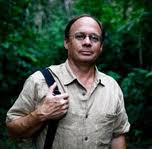
Dr. Adrian Forsyth
Executive Director, Andes Amazon Fund