Conservation Value:
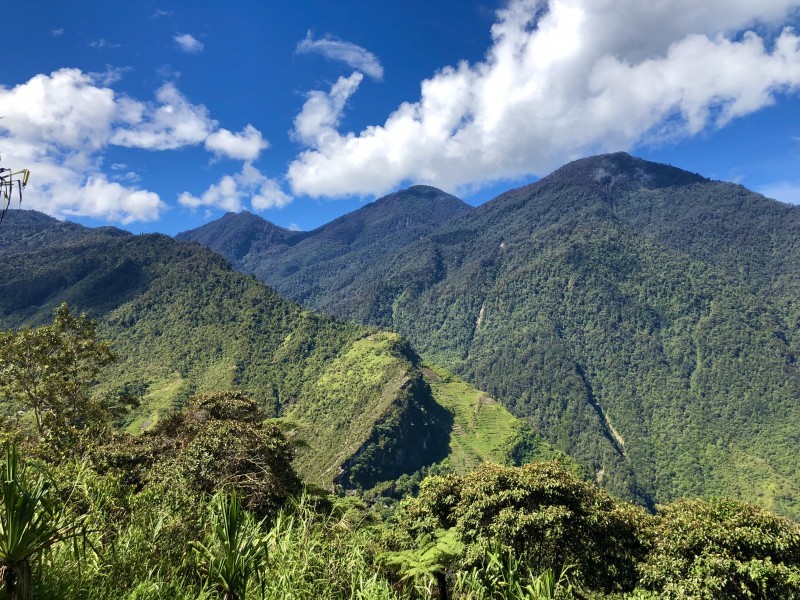
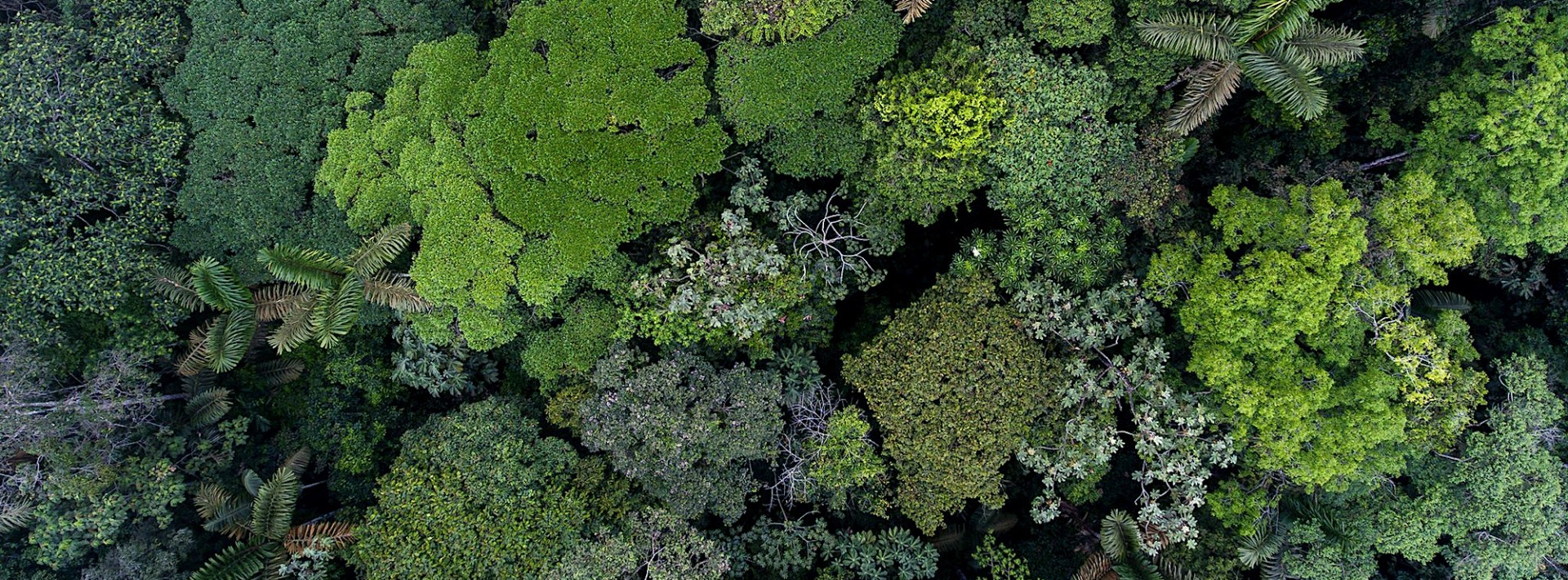
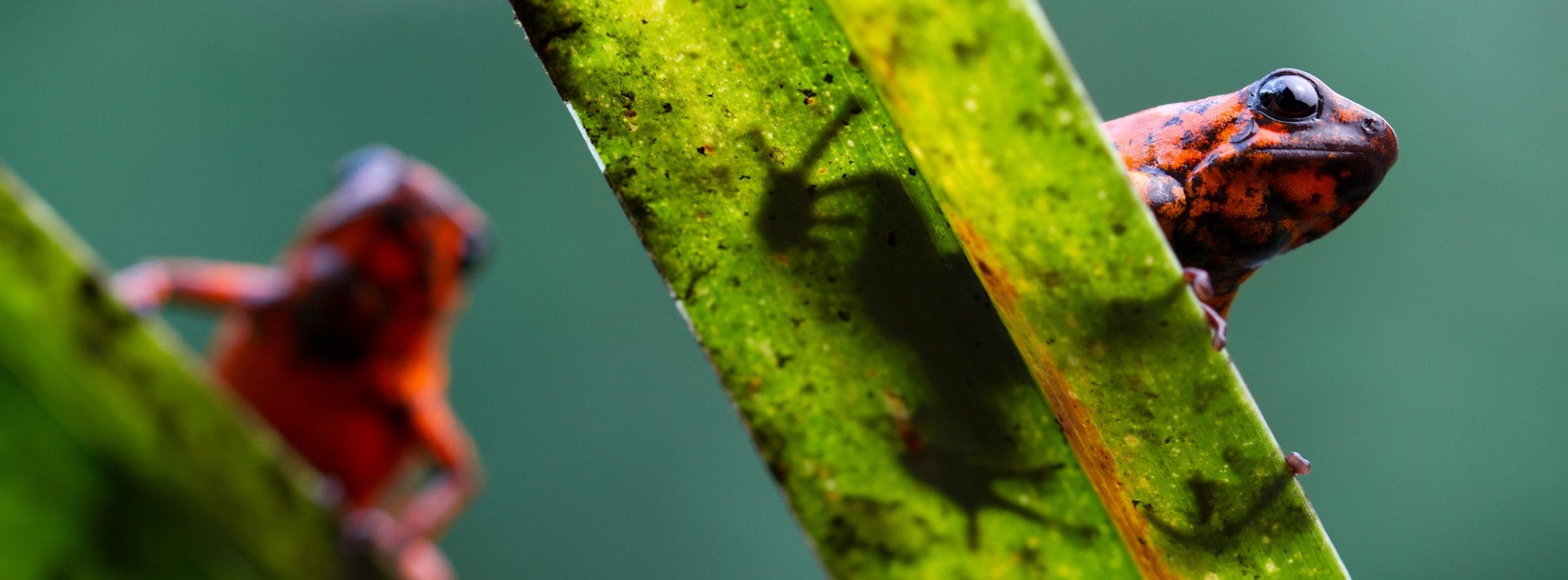
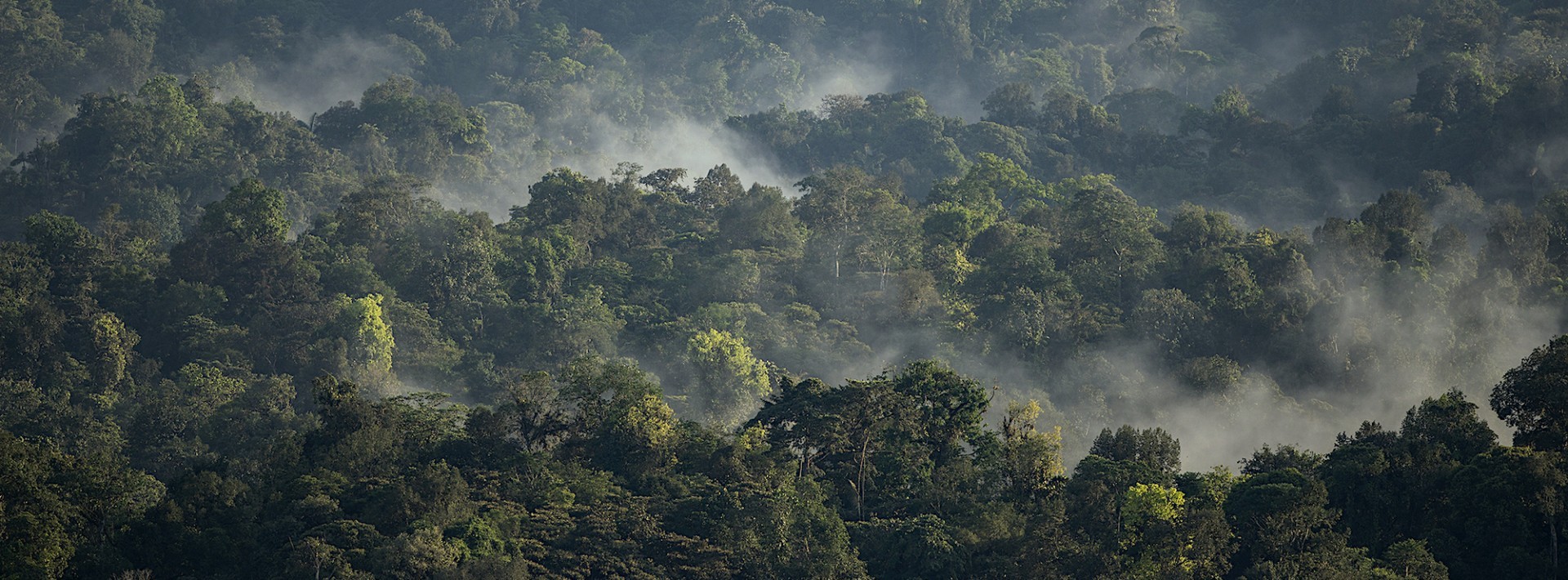
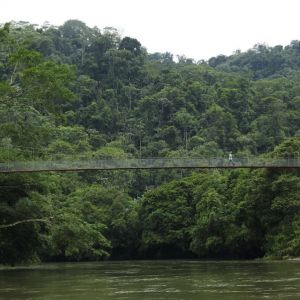
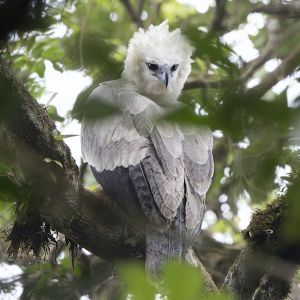
We aim to protect an area large enough to maintain populations of species with very large home ranges such as jaguar, harpy eagle, and great green macaw, and threatened species endemic to the Chocó. The largest remaining forest tract in the Chocó region is within and around the Cotacachi-Cayapas Ecological Reserve—part of the Ecuadorian National System of Protected Areas—which spans an altitudinal gradient of 30-4939 m. A key portion — Canandé Reserve — lies within the Tumbes-Chocó-Magdalena biodiversity hotspot and harbours 134 of the 212 species of amphibians and reptiles in the Ecuadorian Chocó region, the Critically Endangered brown-headed spider monkey, and the largest population of one of the rarest endemic tree species in Ecuador. As identified by BirdLife International, the Canandé Reserve is situated in the Chocó Endemic Bird Area, which has one of the highest number of range-restricted species (62) in the world. It is also part of the Verde-Ónzole-Cayapas-Canandé (EC005) Important Bird Area (IBA). The reserve harbours a number of globally threatened birds species, many found only in the Chocó region. These include the great green macaw (EN), baudo guan (EN), and banded ground cuckoo (EN). See more in the “In More Depth” section below.
“I cannot imagine a more urgent conservation initiative. The Chocó plants and vertebrates are awe-inspiring in richness and heart-breaking in their endangerment.”
— E.O. Wilson, Harvard
Threats:
The Ecuadorian Chocó is a tropical forest frontier region where effective governance is insufficient to prevent rapid deforestation. Less than 2% of the original Ecuadorian Chocó lowland forest remains,yet enough remains to allow long-term ecological sustainability, if protected. The main drivers of deforestation include timber extraction, road construction and resulting colonization and forest clearing; and large-scale oil palm plantations.
Actions & Results:
Ongoing efforts to expand the Canandé Reserve are securing a significant portion of the Ecuadorian Chocó aimed at creating natural corridor between the three protected areas. Nowhere else will an entire range of ecosystems from Chocó lowland rainforests to Andean paramo (high elevation grasslands) be protected on the western slope of the tropical Andes, providing an altitudinal gradient that will help species adapt to the effects of climate change. The project is securing contiguous habitat for species with large home ranges, such as jaguars, harpy eagles and white-lipped peccaries. Over the last five years, Fundación Jocotoco has more than quadrupled the reserve’s size, to 11,671 ha. The discovery in the reserve of eight species new to science (including two species each of mammals and trees) in 2022 testifies to the importance of protecting this region. In 2022, Fundación Jocotoco also achieved the significant milestone of acquiring properties adjacent to the Cotacachi-Cayapas Ecological Reserve, thereby securing its buffer zone.
See further information on land acquisitions and biological discoveries in the “In More Depth” section below.
Location:
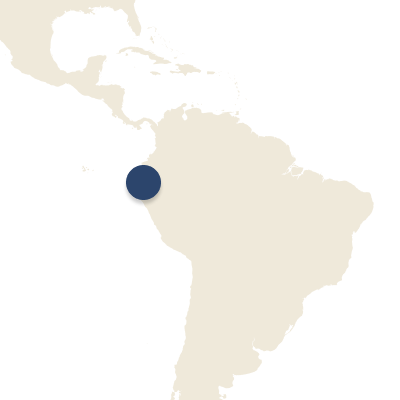
Esmeraldas province in northwestern Ecuador
Size of Area Involved:
Numerous land purchases to establish connectivity and protection of an area of about 4,000 sq km
Project Field Partner:
Our Investment to Date:
Cumulative cost to ICFC (2017-2022): CA$1,139,626 for land acquisition. In 2017 we spent US$16,797 (in 2017) for tree planting on Buenaventura, Canandé, and Jorupe reserves.
Others contributing to the large land acquisition: Rainforest Trust, World Land Trust, American Bird Conservancy, Martine and Bertram Pohl Foundation, DOB Ecology, Ross Beaty, Maple Cross Foundation, and March Foundation
Gallery
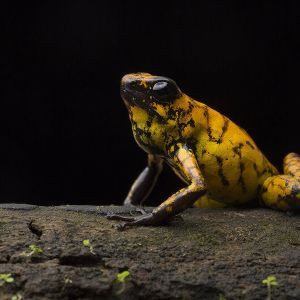
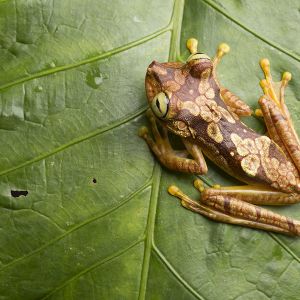
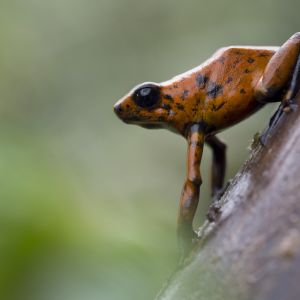
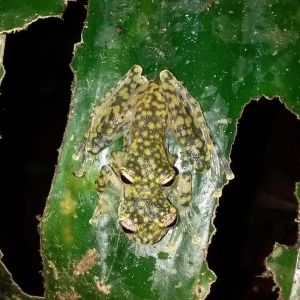
In More Depth...
Highlights from earlier years
• The Endangered horned marsupial-frog (Gastrotheca cornuta), was rediscovered in the Canandé Reserve in a 2018 herpetological expedition by the group Tropical Herping. The frog, which once ranged from Costa Rica to Ecuador, persists in this yet untouched area of the Chocó lowland rainforest thanks to our efforts. This good news received international media attention with stories in National Geographic and The Guardian.
• In 2019, 640 hectares were added to the reserve, including the first property that officially connects the western part of Canandé Reserve to the Tesoro Escondido Reserve. This acquisition is highly important, as it builds connectivity between two large protected areas owned by Fundación Jocotoco, securing contiguous habitat for species with large home ranges, such as jaguars and white-lipped peccaries.
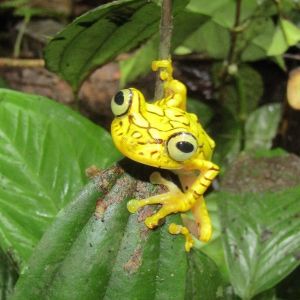
• As further evidence of Canandé’s high conservation value, one of the rarest anurans in South America was recorded in the reserve in 2019. This was only the 4th record of this species of flying tree frog, the Río Cauca fringe-limbed tree frog (Ecnomiohyla phantasmagoria). In addition, three new species of amphibians and reptiles and two new orchid species were discovered in Canandé in 2019.
• With ICFC’s support, the Canandé Reserve was expanded by 640 ha in 2019, and now comprises 7,453 ha.
Conservation Significance
The Canandé Reserve is situated within the Ecuadorian portion of the Chocó-Darién biogeographic region (the Chocó), an area which has been identified by BirdLife International as an Endemic Bird Area due its high number of Restricted-range Species (62) in the world. It is also part of the important Bird Area EC005 Verde-Ónzole-Cayapas-Canandé. When it comes to amphibians and reptiles, the Canandé Reserve is the most herpeto-diverse locality west of the Andes in Ecuador, and the most diverse in the Chocó region. The Ecuadorian Chocó is home to 212 species of amphibians and reptiles, 134 of which are found within the Canandé Reserve (Ortega-Andrade et al., 2010). In comparison, richer communities of amphibians and reptiles in the Neotropics are only found in the upper Amazon basin i.e., 220 in Leticia, Colombia; 185 in Santa Cecilia, Ecuador; and 271 in Yasuni National Park, Ecuador (Arteaga, 2016). Furthermore, the Ecuadorian Chocó, and in particular the Canandé Reserve, are special because 10% of their species are endemics.
About 22% of the species known to occur in the Canandé Reserve have not been evaluated by the IUCN, although some are likely to qualify as endangered, and 20% of species have been evaluated as Vulnerable, Endangered or Critically Endangered. These include: the elusive and Endangered Mache Glassfrog (Cochranella mache), the recently described and Not Evaluated Nieto’s Rainfrog (Pristimantis nietoi), the Vulnerable Ornate Rainfrog (Pristimantis ornatissimus), and the Not Evaluated Dwarf-Gecko (Lepidoblepharis grandis). Lastly, the Canandé Reserve area also harbours probably the most important population of the Critically Endangered Brown-headed Spider Monkey (Ateles fusciceps fusciceps), a subspecies of the also Critically Endangered Black-headed spider monkey (Ateles fusciceps). The Brown-headed Spider Monkey is one of the 25 most endangered primates in the world. In addition, the Canandé Reserve also harbours the largest population of one of the rarest endemic tree species in Ecuador, the Critically Endangered Ecuadodendrum acosta-solisianum, which is only known from two localities.
| Table 1: Threatened species protected by Canandé Reserve, with IUCN Red List designation: Critically Endangered (CR), Endangered (EN), and Vulnerable (VU).
Brown-headed Spider Monkey (Ateles fusciceps) (CR; at least 13 groups counted in one survey in 2015. The Canandé Reserve watershed together with the Cotacachi-Cayapas Reserve is the global hotspot for that species.) Plumbeous Forest Falcon (VU), Great Green Macaw (EN; at least 36 individuals. This is the largest known group in Ecuador), Scarlet-breasted Dacnis (VU), Baudó Guan (EN), Banded Ground-Cuckoo (EN), Brown Wood-rail (VU), and Plumbeous Hawk (VU). Plants: Ecuadendron acosta-solisianum (EN, 100 adult trees identified; more surely occur as only 10-20% of Canandé Reserve have been surveyed. Known to occur at Cambugán but no numbers are available.100 seedlings produced) , Magnolia canandeana (CR) Amphibians & Reptiles: Cochranella mache (EN). P. ornatissimus (VU), P. rosadoi (VU), Hyloxalus awa (VU), H. toachi (EN), B. medemi (VU), Echinosaura horrida (VU), Teuchocercus keyi (VU), Corallus blombergi (EN), , Spilotes pullatus (VU), Rhinoclemmys annulata (NT), R. nasuta (NT) |
Images - reptiles & amphibians
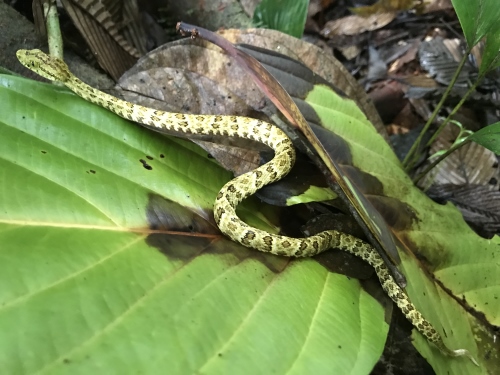
Spotted lancehead at Canandé Reserve (credit: Efraín Cepeda)
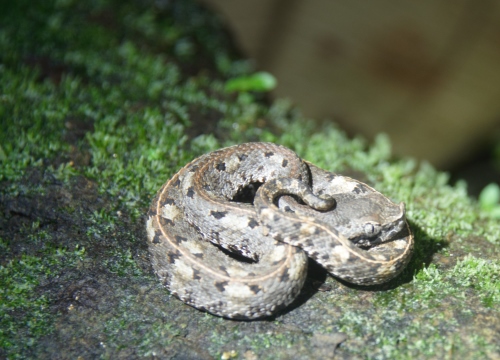
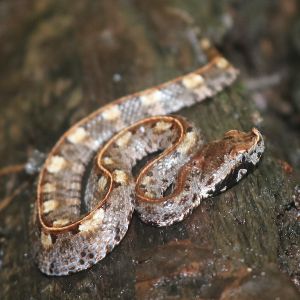
Juvenile rainforest hognosed-pitviper at Canandé Reserve (credit: Carlos R. Garcia)
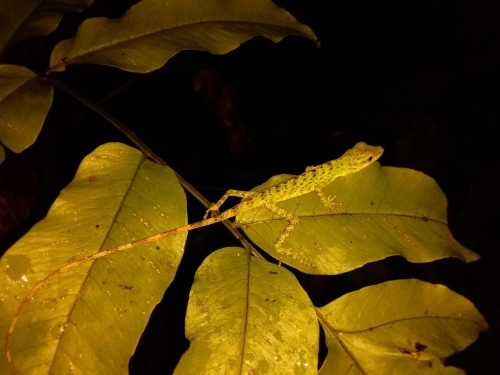
Neighboring anole at Canandé Reserve (credit: José Añapa)
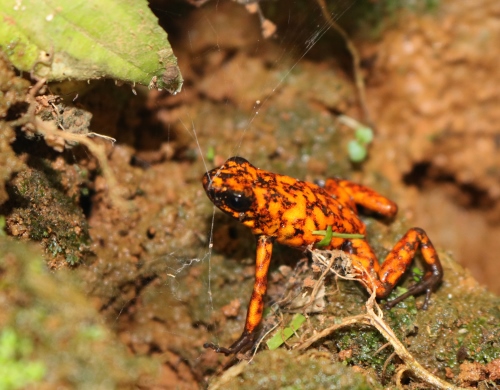
Little devil poison frog at Canandé Reserve (credit: Martin Schaefer)
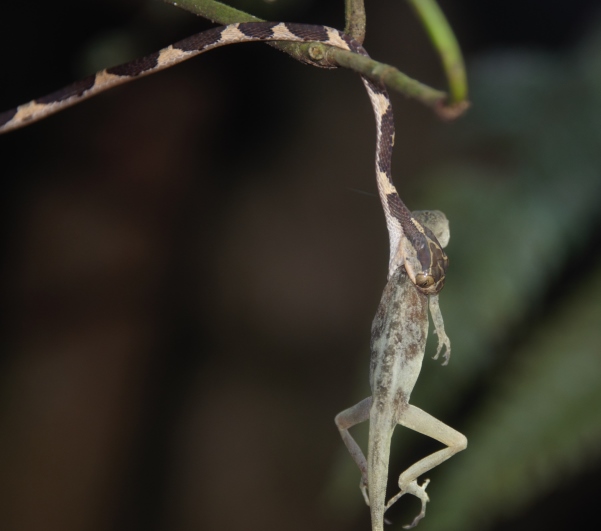
Blunthead tree snake eating a blotchbelly anole at Canandé Reserve (credit: Carlos R. Garcia)

Blunthead tree snake eating a blotchbelly anole at Canandé Reserve (credit: Carlos R. Garcia)
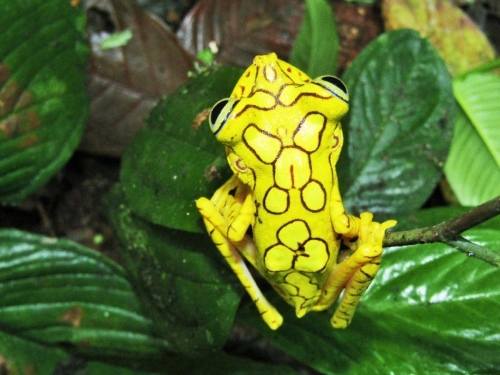
Chachi tree frog at Canandé Reserve (credit: Jorge Zambrano)
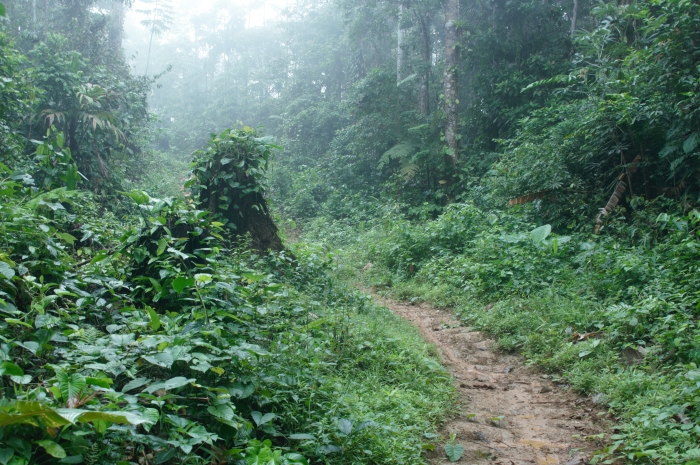
Images - habitat

Credit: Efraín Cepeda
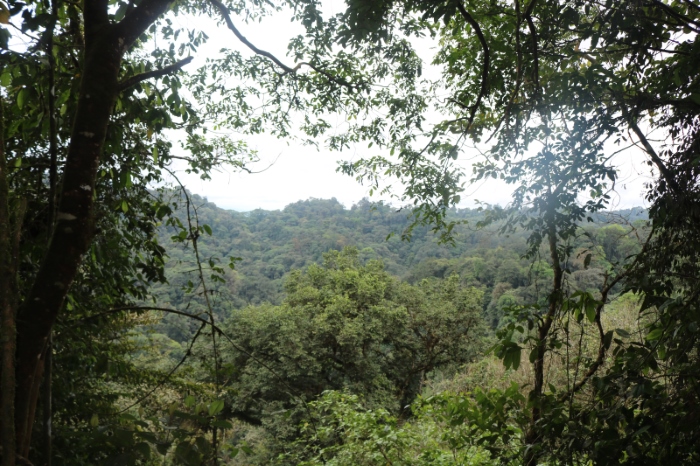
Credit: Efraín Cepeda
Images - threats
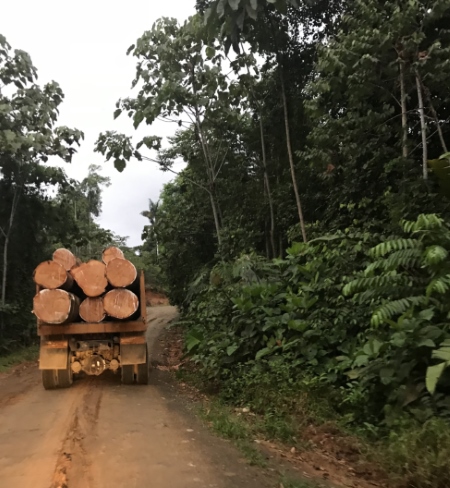
Credit: Martin Schaefer

Credit: Martin Schaefer

Credit: Carlos R. Garcia

Similar Projects
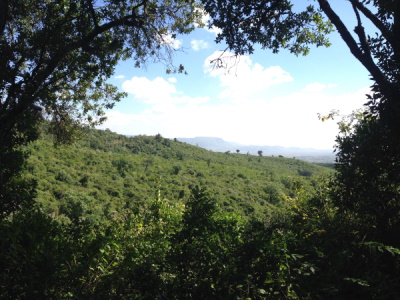
Halting the deforestation and degradation of Kijabe Forest
Find Out More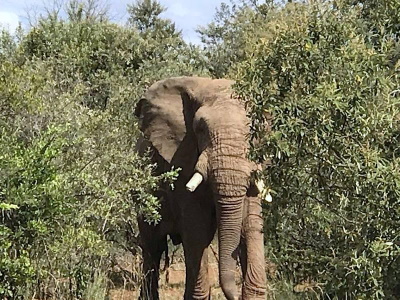
Conservation of elephants and other wildlife at Mukutan Conservancy
Find Out More