


Goal:
To protect and increase the population of the Critically Endangered blue-throated macaw and other species of the Beni Savanna ecosystem through conservation at Barba Azul Nature Reserve.
This project is fully funded at present.
(Support is welcome for other projects)
Conservation Value:
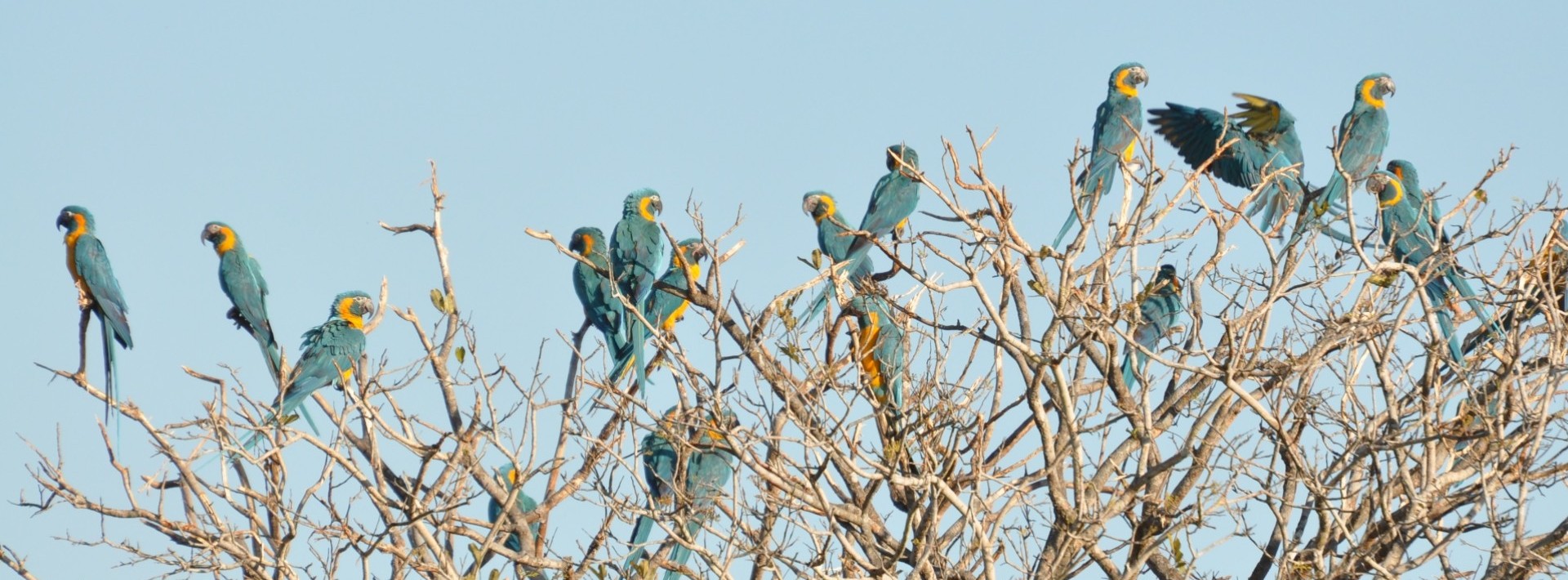
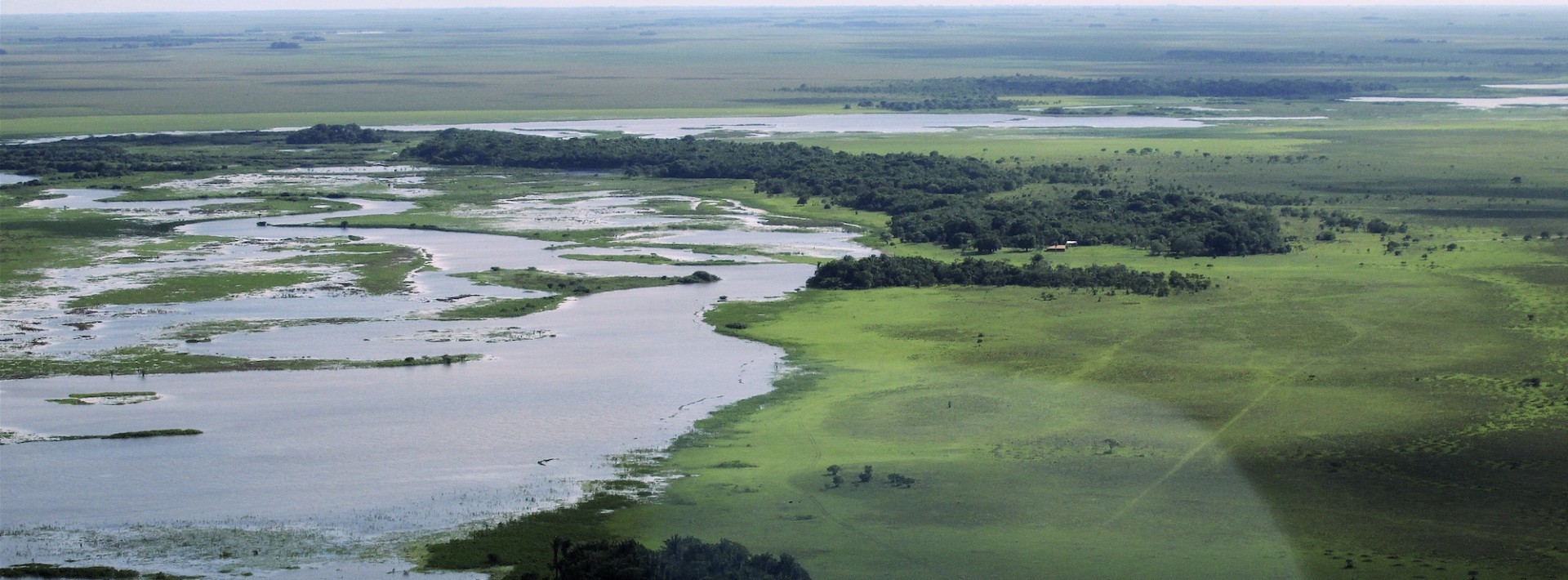
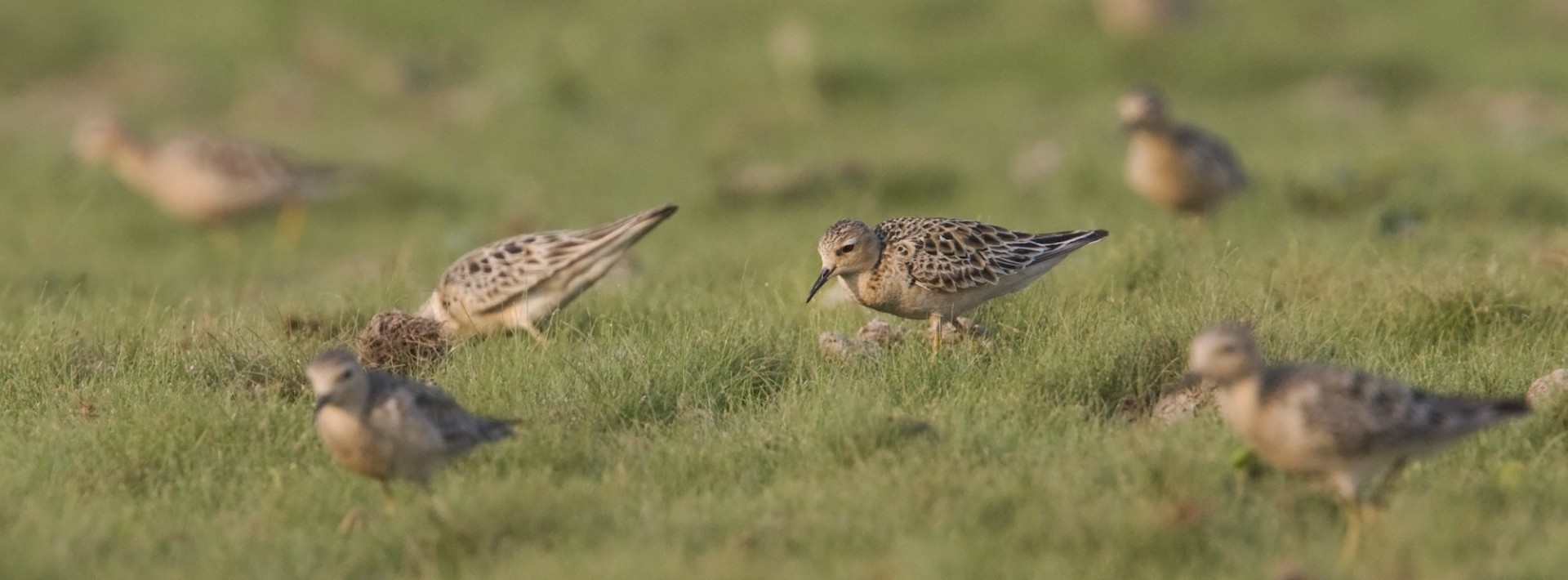
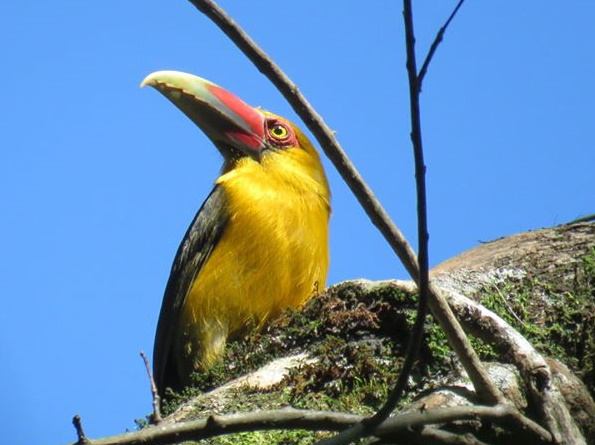
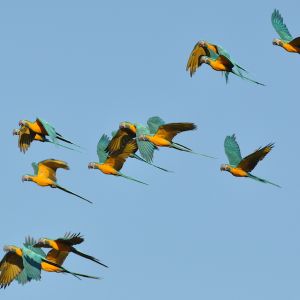
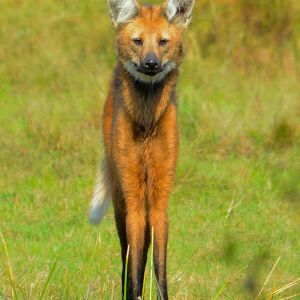
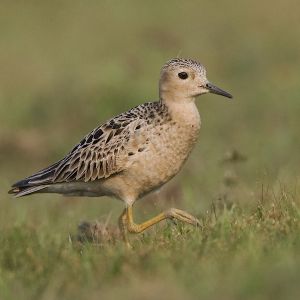
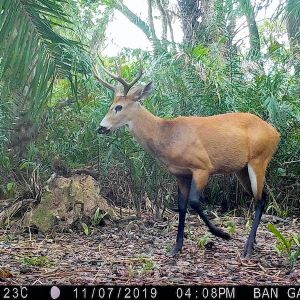
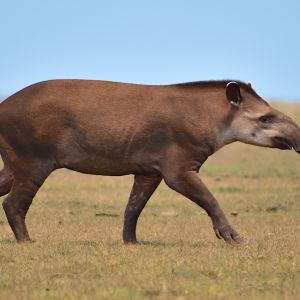
The Critically Endangered blue-throated macaw, with a total wild population of fewer than 350 individuals, is found only in the Beni Savanna of Bolivia, where Barba Azul Reserve constitutes key non-breeding habitat, with counts of up to 209 birds (2024). The reserve also protects the Beni Savanna ecosystem in a natural state, protecting it from fires and overgrazing. As many as 2,450 buff-breasted sandpipers (VU) use the reserve on migration, making this the most important stopover site in Bolivia. Of its 146 mammal species, several are found nowhere else in Amazonia, including the Beni titi monkey (Endangered), maned wolf (Near Threatened), and the pampas deer. Also present are the southern tamandua, black howler monkey, capybara, jaguar and high concentrations of giant anteater. (See our Gallery, below, and Armonia’s wonderful Photo/Video gallery)
Threats:
The blue-throated macaw and other species sharing the Beni Savanna face ongoing loss of their habitat from conversion for cattle ranching. Cattle ranching can be made much more ecosystem-friendly, as our local partner aims to demonstrate to ranchers.
Actions & Results:
- While some fenced portions of the reserve are now cattle free; other areas are actively managed with cattle to produce grass hieghts attractive to migratory shorebirds such as the buff-breasted sandpiper.
- A network of extensive firebreaks prevents the spread of human-caused fires, allowing the savanna ecosystem to function naturally.
- Palm island habitats provide the macaw’s chief food of motacu palm fruits, but some lack regeneration because of cattle grazing. Annual work continues to fence key habitats to exclude cattle and transplant palm seedlings on these islands.
- Extensive surveys have located new breeding areas for blue-throated macaws outside the reserve under consideration for land acquisition.
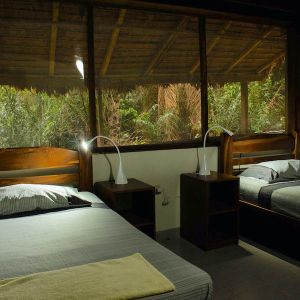
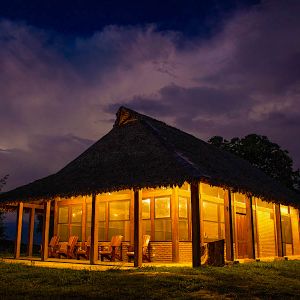
- Improvements in the tourism infrastructure have been completed, with a new comedor (dining facilty), upgraded cabins, solar power and a water storage structure. Post-pandemic we expect increased revenue from ecotourists and researchers.
See 2025 Highlights
2025 Highlights: The global Blue-throated Macaw census confirmed that Barba Azul and its surrounding landscape host the largest population of macaws—well over 200 individuals. And a previously undocumented roost (140 macaws) was found near Barba Azul.
Asociación Armonía reported the presence the Endangered Dwarf Tinamou—a species previously thought to occur only in Brazil. Its dependence on old-growth savanna and on burrows created by the recently returning Brazilian Guinea Pig highlights the importance of long-term habitat protection. Together, these species help sustain predators such as Pampas Cat, Bush Dog and the Maned Wolf, which was observed by 60% of visitors in 2025.
Location:
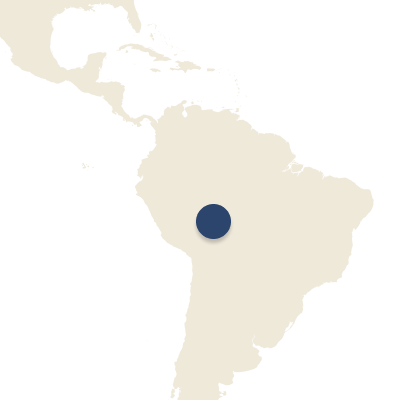
Beni Savanna, Bolivia
Size of Area Involved:
11,000 hectares/110 km2 (27,266 acres). Compare with: Manhattan Island is 60 km2
Project Field Partner:
Our Investment to Date:
Cumulative cost to Biome: Barba Azul reserve (2010-2025): CA$678,280
(Ongoing in 2026)
Laney Rickman reserve (2018): CA$37,057
See also: land acquisition for Barba Azul reserve and land acquisition for Laney Rickman reserve
Gallery


In More Depth...
Project Partners and Personnel
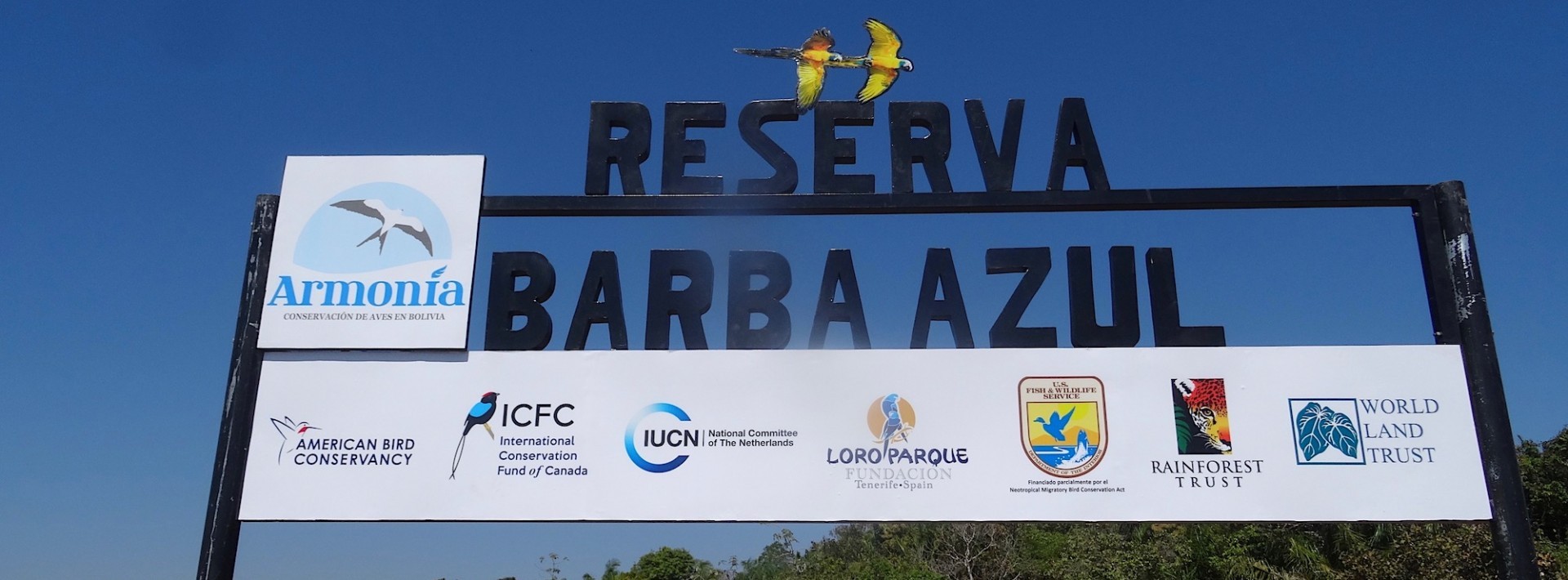
Our field partner is the Bolivian organization Asociación Armonía, which owns and manages Barba Azul Nature Reserve. Other regular supporters of Barba Azul are the World Land Trust, American Bird Conservancy, March Conservation Fund, the Neotropical Migratory Bird Conservation Act program (USF&WS), Cincinnati Zoo and Bird Bolivia.
Asociación Armonía is a Bolivian accredited non-profit conservation organization created in 1993. It is supported by the regional governments of Beni and Santa Cruz and the Bolivian national park administration (SERNAP). In 2009, Armonía received a certificate of commendation from the Bolivian government for its efforts to protect Bolivia’s birds and their habitats. Armonía manages twenty conservation programs, including twelve programs with threatened species. Key personnel are Conservation Program Director Tjaille Boorsma, Luis Miguel Barbosa, CEO/development director Bennett Hennessey, executive director Rodrigo W. Soria Auza, and Rocio Alanso who attends to visiting tourists.
Background
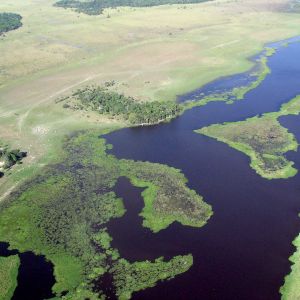
The Critically Endangered blue-throated macaw is found in only one place on Earth: the Beni Savanna in northern Bolivia. Fewer than 450 individual birds remain in the wild. Extending over 126,100 sq km, this complex ecosystem of grasslands, marshes, forest islands and gallery forest supports a diverse and distinctive flora and fauna. Surveys indicate over 354 bird species, including many waterbirds and several species of North American migrants. As many as 2,500 buff-breasted sandpipers (a Vulnerable species) were counted there recently, making this the most important stop-over site in Bolivia. Of its 146 mammal species (see mammal video, below), several are found nowhere else in Amazonia, including the pampas deer, the Near Threatened maned wolf, and the Endangered Beni titi monkey. Also present are the southern tamandua, black howler monkey, capybara, jaguar and high concentrations of giant anteater.
The Beni is entirely privately owned, mainly by ranchers. Much of it is being degraded by overgrazing, planting non-native grasses, and aggressive fire management, as each year more of this habitat is lost to intentional burning for pastureland.
The Blue-throated Macaw, whose Spanish name, Barba Azul, means blue beard, was shrouded in mystery until recently. Known from cage birds captured from the wild and from paintings and specimen collections, its range was finally pinned down to the Beni Savanna. There, it depends on palm trees for nesting sites. The macaw faces threats from the illegal pet trade and degradation of its habitat. In particular, the burning of forests kills palm seedlings, resulting in fewer palms for the birds to use for nesting.
In 2008, with support from American Bird Conservancy and World Land Trust-US (now Rainforest Trust), the Bolivian conservation organization Asociación Armonía was able to purchase land for the Barba Azul Nature Reserve, creating the first protected area for the blue-throated macaw, whose wild population is believed to number only 350 individuals. The impetus for the reserve was the finding of a thriving colony of at least 80 birds (now numbering about 100), whereas previous surveys had turned up only small groups of 2-3 pairs. The first step was the removal of cattle from the reserve.
When the adjacent Santa Anita ranch came on the market, several conservation organizations including ICFC took advantage of a great opportunity to double the size of the reserve. With almost one third of the population of blue-throated macaws, this property is a valuable addition.
About 125 macaws pass 6-8 months on the reserve during the dry season, then disperse elsewhere to nest during the rainy season. Nest boxes erected at the reserve have yet to be adopted by macaws, although other species have used them. In the Marban area, Armonia has had success in having this species adopt next boxes, which appears to have led to an increase in population there. Since 2005 the nest box program at Armonia’s Laney Rickman Reserve has fledged 145 blue-throated macaws!
Related viewing
An introduction to Barba Azul Reserve and its wildlife.
This video explains the importance of the motacu palm tree to the blue-throated macaw and the many mammals of the Barba Azul Nature Reserve that depend on its abundant fruit.
And here’s one on the mammals of Barba Azul reserve:
Actions and Results
Reserve Management
Much has been accomplished in the reserve’s short history:
- In 2015, ICFC and American Bird Conservancy purchased a John Deere tractor — a key conservation tool! In just 6 months, the tractor enabled:
- the creation of 60 km of firebreaks (without firebreaks, much more savanna burns each year than the natural amount of 5-10%);
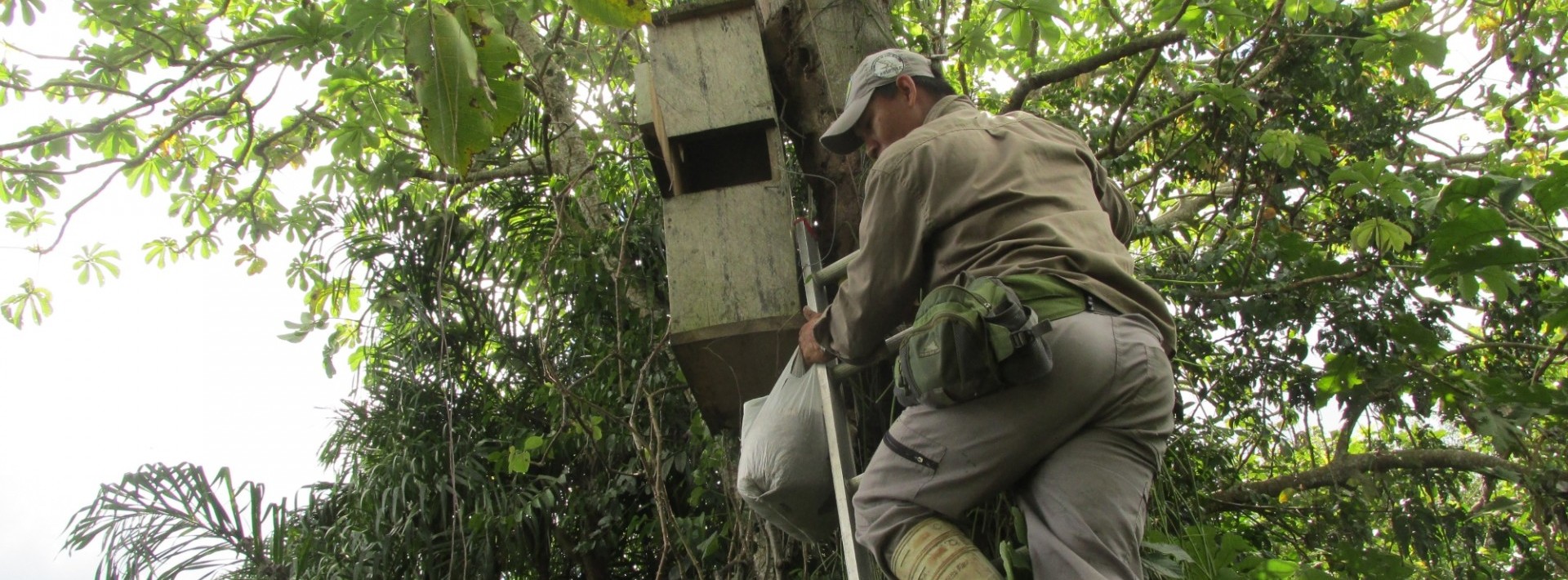
- installation of 4 km of fencing along the entire southern border of the reserve to keep out cattle; installation of 10 new nest boxes for Blue-throated Macaw in the most inaccessible corners of the reserve and access to remote parts of the reserve for other purposes.
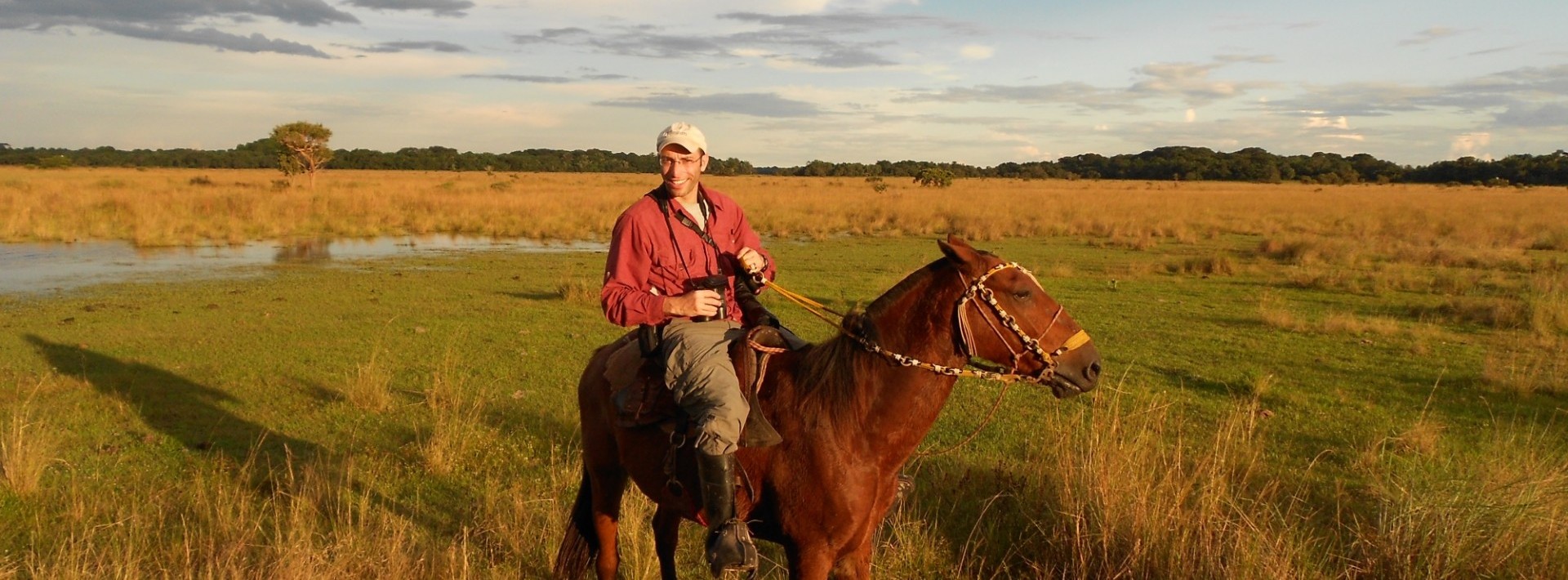
- More generally, fencing has been important, as has having a cowboy on staff at the reserve to constantly deal with invading cattle and cowboys at neighbouring ranches.
- Nest boxes placed in the reserve since 2010 have not yet been used for nesting by Blue-throated Macaws, but have been used by other species including crane hawk, barn owl, toco toucan and white-eyed parakeets. In 2011, another twenty nest boxes were established for the threatened Orinoco goose.
- A biological station was established in the reserve to enable continued research, monitoring and protection. Graduate students are conducting a variety of ecological research that will provide a basis for refining reserve management.
- Ecotourism is being developed and renovations include new accommodations, dining facilities, boardwalks (570m), and quiet solar electricity.
- A small nursery was established and Motacu palm seedlings will be moved from the nursery to newly created forest islands and islands undergoing restoration.
- Asociación Armonía has reduced illegal trade in blue-throated macaws through education and media campaigns.
- In 2024 a high-count of 209 wintering blue-throated macaws was observed on the Reserve.
Buff-breasted sandpipers at Barba Azul
A significant portion of the Barba Azul Beni Savannah provides an important migratory stop-over for buff-breasted sandpipers during their annual southbound migration en route for Brazil. Up to 3,000 buff-breasted sandpipers land at Barba Azul to rest and find food after departing Colombia and crossing non-stop over the immense Amazon basin. Our partners at Barba Azul are now actively managing this species’ habitat with the aim to protect these birds from disturbance and provide optimal foraging conditions.

Similar Projects
Deploying strategic security and technology to save rhinos
Find Out More
Mali Elephant Landscapes – Paysages des éléphants du Mali
Find Out More