Goal:
To ensure the long-term survival of the Togo slippery frog and other endemic wildlife in the Togo-Volta Hills.
This project is fully funded at present.
(Support is welcome for other projects)
Conservation Value:
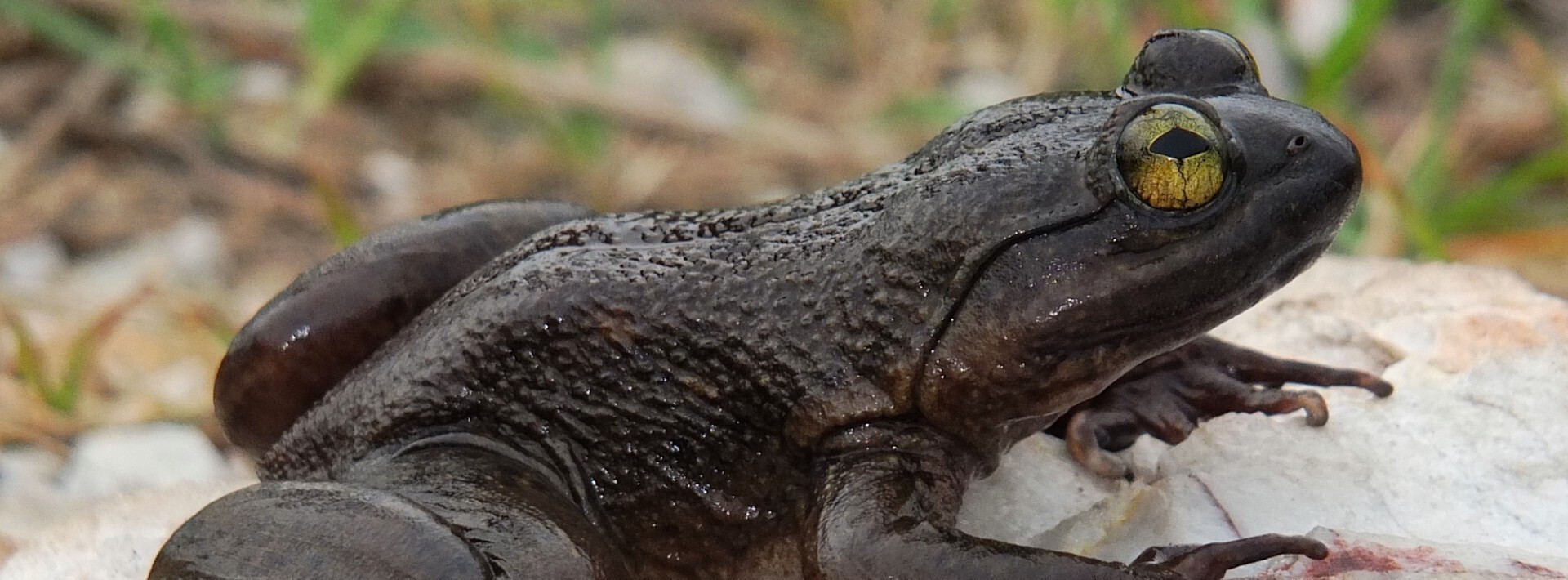
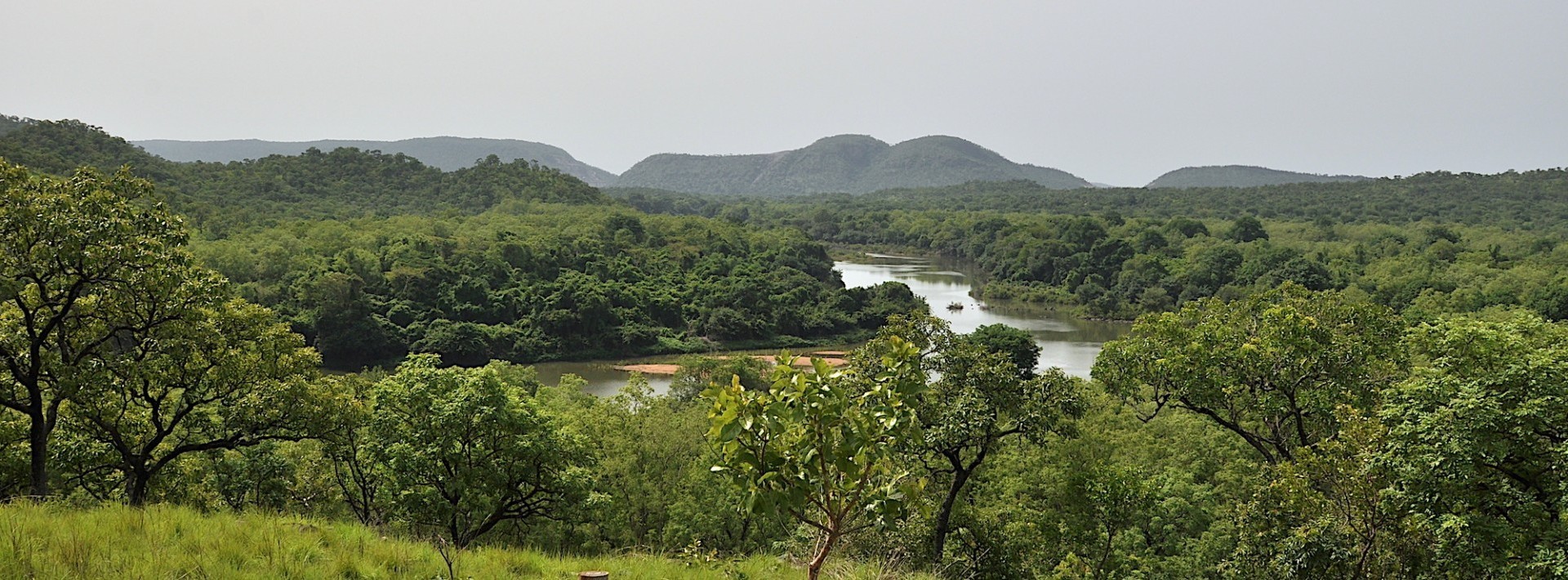
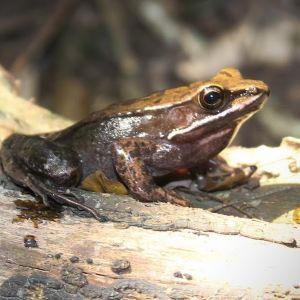
The Togo-Volta Hills along the Ghana-Togo border harbour some of the last remaining forests in the Dahomey Gap—a savannah corridor that separates the upper and lower Guinea forests in West Africa. These remnant highland forests are home to many endemic species isolated from the more expansive rainforest blocks to the west and east. Threatened species include the white-bellied pangolin (VU), Ukami reed frog (EN), Ivory Coast frog (EN) and hooded vulture (CR). The endemic and Critically Endangered Togo slippery frog (Conraua derooi) is a prominent feature of this forest. It is the closest known relative of the largest frog on the planet, the giant slippery frog (Conraua goliath), and as genetically distinct from other amphibian relatives as pigs are to whales. Small and isolated populations were recently rediscovered after nearly 40 years during which it was assumed extinct. One is in the Atewa Hills, but its future is in doubt due to mining activity there. The other is in the Togo-Volta Hills — the focus of this project.
Threats:
Habitat loss is a primary threat and stems from agriculture, logging and expanding settlements. The landscape is mountainous and rocky, making suitable farming land rare. Local farming practices do not guarantee sustained crop yields, hence, demand for land is on the rise. This beautiful, mountainous landscape attracts wealthy individuals from the cities interested in buying land for commercial enterprises, such as hotels. In similar sites in the Republic of Togo, human settlements have surrounded entire forest habitats. Hunting also threatens the long-term stability of many endangered species in and around the project area. Traditional hunting tribes are widespread in the area and threaten the future of Ghanaian wildlife if conservation education and alternative livelihood activities are not advanced.
Actions & Results:
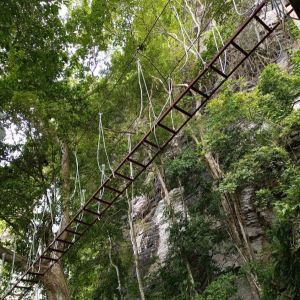
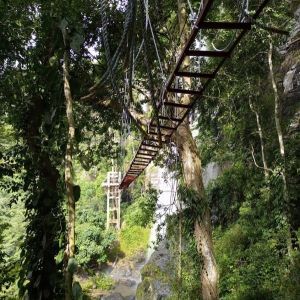
With ICFC’s support, Herp Conservation Ghana completed the construction of a 200-metre canopy walkway in a scenic waterfall area near the town of Amedzofe (Volta Region). The project also entailed developing community-driven ecotourism to increase tourism revenue in support of ongoing conservation efforts. Although the canopy walkway was finished on time, the start of ecotourism tours was delayed several months due to COVID-19.
Working with communities to protect the Togo slippery frog in Ghana (video)
Location:
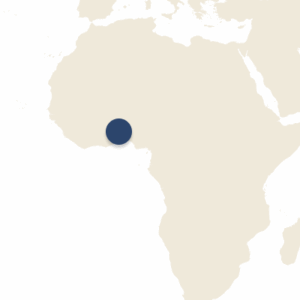
Volta Region, Ghana
Size of Area Involved:
863 hectares
Project Field Partner:
Our Investment to Date:
Cost to ICFC (2020-2021): CA$31,135
Gallery
In More Depth...
Background on Herp-Ghana's work
Herp-Ghana has successfully engaged key stakeholders at both the community (i.e., community leaders, land and farm owners and community members in the main towns of Amedzofe and Gbadzeme) and government levels (i.e., local lawmakers and Wildlife Division) to legally designate an 847-acre municipal level protected area called The Onepone Endangered Species Refuge (OESR). The OESR is the first protected area of its kind in Ghana and it is currently in the process of being expanded to 12,132 acres, comprising a 2,132-acre area of no-use zone and a 10,000-acre buffer area of sustainable use. At the community governance level Herp-Ghana has also successfully set-up functional community-wildlife management structures. These structures are in line with the requirement of the Ghana Wildlife Division.
In addition, Herp-Ghana has built strong community support for its conservation work. At least 3,000 community members in the two targest communities (i.e., Amedzofe and Gbadzeme) have been familiarized with conservation issues. A key component of Herp-Ghana’s success with local communities is its Behaviour Change Programme. In each community it selects and equips volunteers with skills to deliver behaviour change initiatives tailored to address pre-identified threats within their respective communities. So far Herp-Ghana has trained over 50 passionate young volunteers who are championing the cause of frog conservation in their local communities. The Behaviour Change Program has successfully contributed to a remarkable decline in local people’s willingness to consume frog meat by 86.5% in 2 years. Furthermore, to ease pressures on riparian frog habitat, Herp-Ghana has also constructed two mechanized boreholes for local communities to use. Before this project intervention, the communities did not have access to potable water and thus depended on water from streams used by the last remaining populations of the Togo slippery frog. The construction of these simple mechanized boreholes has led to ~99% of households living near the water catchment area to switch from using stream water to well water thereby minimizing the impact on critical frog habitat.
Video: Whitley Awards 2019

Similar Projects
Deploying strategic security and technology to save rhinos
Find Out More
Mali Elephant Landscapes – Paysages des éléphants du Mali
Find Out More