
Goal:
To prevent extinction of the Critically Endangered Hooded Grebe and secure its future.
This project is fully funded at present.
(Support is welcome for other projects)
Conservation Value:
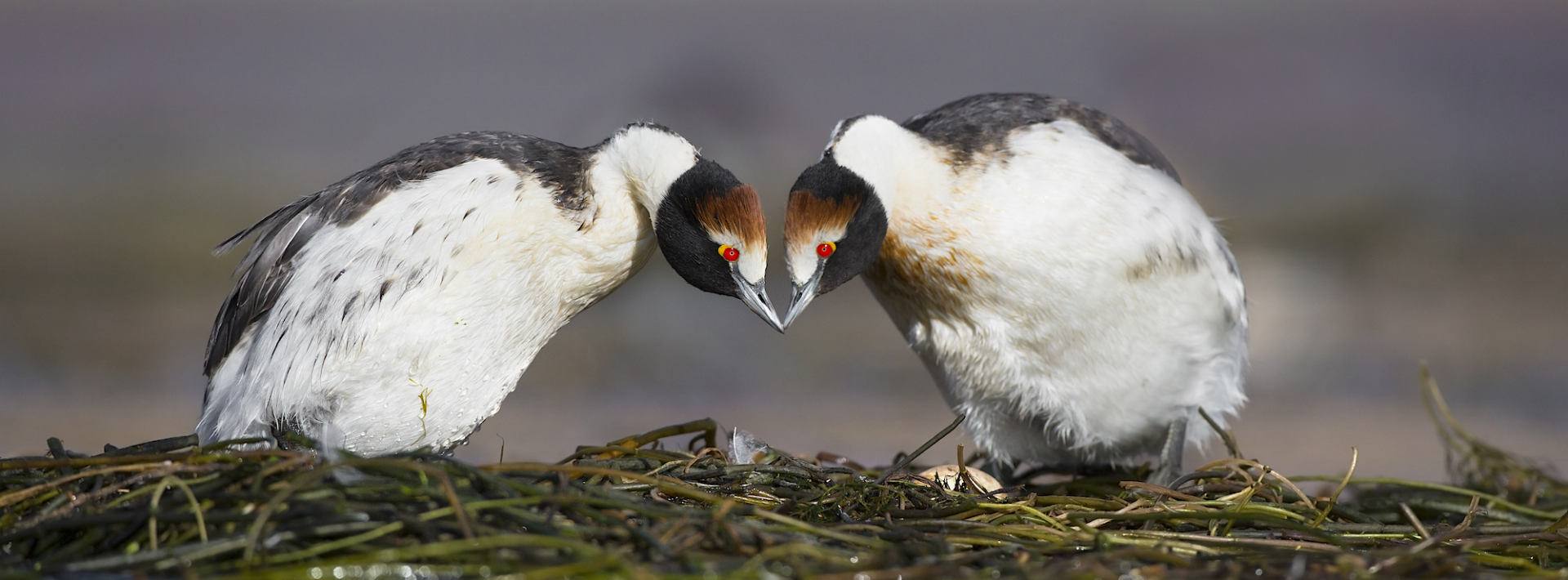
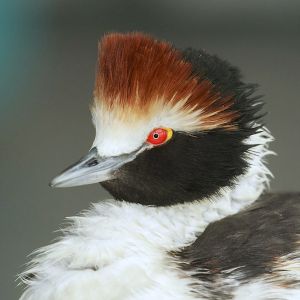
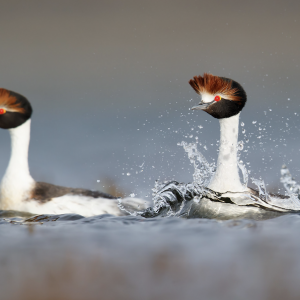
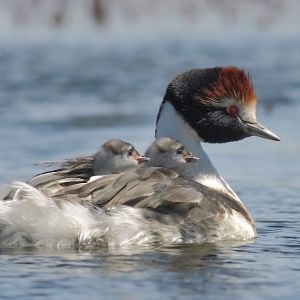
Discovered by accident in 1974 by the famed Argentine ornithologist Maurice Rumboll, the hooded grebe nests on lakes and lagoons of Patagonia’s windswept plateaus. Declared Critically Endangered in 2011, the global population hovered around 700 individuals. Its population decline in recent decades is attributed to the introduction of mink and trout in its breeding range and increased predation by kelp gulls, a native species whose population has increased for anthropogenic reasons. The good news is that the chief causes of its decline have been identified and are being addressed by this project, averting what would undoubtedly be a path to extinction. See the wonderful BBC video below.
Threats:
Predation by introduced mink; competition and adverse ecological changes from introduced trout; predation by kelp gulls; windblown sedimentation of lakes resulting from sheep grazing; drowning of adults in fishing nets at wintering sites; and increasingly extreme weather events, which flood nests.
Actions & Results:
- The project has ended this species’ rapid population decline through mink control (an exotic, invasive predator), particularly prior to the annual grebe breeding season. In 2024, 27 mink were removed from breeding sites and there was no mink predation on grebes.
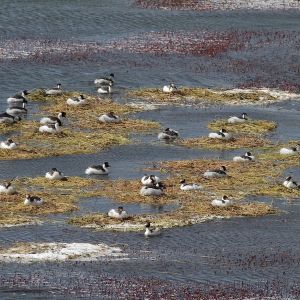
- New since 2022 artificial floating nesting platforms are being deployed, and they have become prime real estate! In 2024-25 many pairs of grebes nested on platforms again! The platforms are anchored to the lake bottom and less susceptable to damage by high winds.
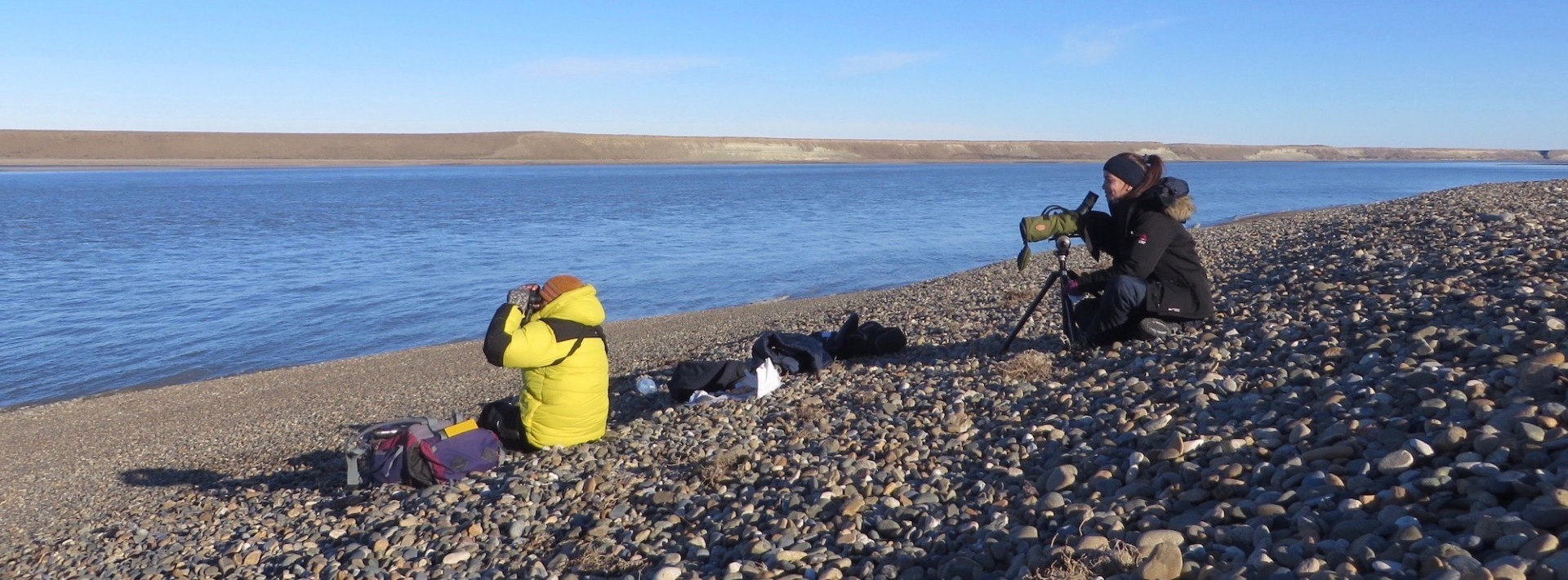
- Once grebe have settled into nesting sites, grebe guardians watch over every colony.
- Efforts by project personnel led to a regulation forbidding the introduction of trout on the Buenos Aires plateau; the aim is to extend this regulation to other plateaus. (This is not easy to enforce, however.) Trout are being removed from all grebe breeding lakes.
- If a grebe pair abandons an egg after the first egg hatches, these eggs are now collected by guards and then successfully hatched in incubators, so these young are reunited with their families and increase overall fledging productivity.
Location:
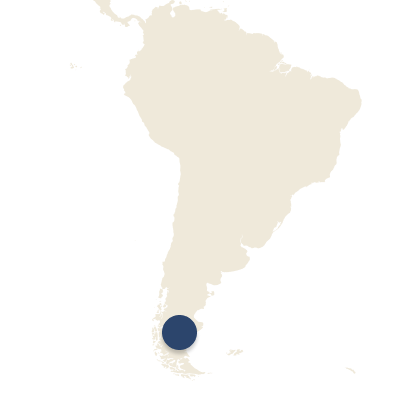
Western Santa Cruz Province, Argentina
Project Field Partner:
Our Investment to Date:
Cumulative cost to ICFC (2012-2024 for hooded grebe and 2021-2024 for Magellanic Plover): CA$968,837
2025 budget (ICFC portion): US$82,880 (shared with the Magellanic Plover project in the same location.)
Gallery



Video
In More Depth...
Project Partners
Our partner is the Argentinian conservation organization Aves Argentinas, with project leader Kini Roesler. Aves Argentinas also works together on hooded grebe conservation with Asociación Ambiente Sur.
Background
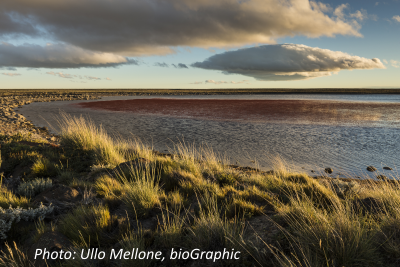
The Hooded Grebe, Podiceps gallardoi, is endemic to Santa Cruz province in southern Argentina. Its breeding range is restricted to upland plateaus (above 700 m asl) in which basaltic lagoons, where the grebes breed, are interspersed with grasslands and sheltered areas with shrubs. During the austral winter (the non-breeding season) the grebe migrates to the Atlantic coast where it winters in river estuaries — areas that are also important for wintering shorebirds, both Patagonian and Neartic.
Now listed as Critically Endangered, the species has declined from a population estimated at 3000-5000 in the mid-1980s to one “unlikely to exceed 800”. The good news is that the chief causes of its decline have been identified and can be addressed. Ambiente Sur (our partner) and Aves Argentinas have developed a comprehensive program that counters the key threats. They have already been successful in reducing drowning in fishing nets at coastal wintering areas by encouraging fishermen to shift fishing activities away from areas used by the grebes.
Following years of promotion by Argentinean conservation organizations (Ambiente Sur, Aves Argentinas and Fundación Flora y Fauna Argentina), a new national park — Parque Nacional Patagonia — was created in March 2013. This will protect a sizeable portion of the breeding range of the Hooded Grebe, and the aim is to futher expand the park to include more if its breeding range.

Theatre production. photo: Asociación Ambiente Sur
Actions and Results
At breeding areas:
- Surveys are conducted annually to estimate breeding population and locate colonies. In the 2024-2025 breeding season, the 741 adult grebes tallied at 75 lakes across 11 plateaus.
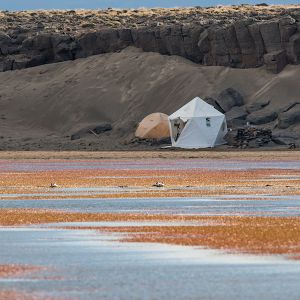
- A guardian is stationed at each active breeding colony; volunteers are trained and engaged as field assistants.
- Control of American mink (mainly trapping) is a crucial activity; guardians and volunteers also collect information on mink numbers and distribution. Specially trained dogs are sued to find mink hiding places. Mink control has greatly improved grebe breeding success and mink numbers at grebe breeding areas are now lower. The long-term plan is eradication of mink from high plateau breeding grounds and a reduction in their number in the surrounding low plateaus.
- Measures are taken to deter breeding of Kelp Gulls near Hooded Grebe colonies and this has also reduced mortality and numbers of Kelp Gulls at grebe colonies.
- Deployment of artificial nesting platforms continues to be successful. The platforms offer the advantage of being anchored to the lake bed, thus protecting the nest from being vlown ashore during most high winds.
- A new effort collecting abandoned grebe eggs to hatch at the Biological Station is now underway with success. In 2025 3 chicks fledged and were released back into the wild.
- Funded separately: Removal of trout from lakes (using a team of artisanal fisherman) and preventing introduction of trout to new areas.
Parque Nacional Patagonia
- In March 2013 Argentina declared a new national park — Parque Nacional Patagonia — support for which was leveraged by this project. This represents a major breakthrough for the grebe and the region, protecting 52,000 hectares and one of the most important grebe breeding colonies.
Future measures (not part of this project):
Collaboration
The research informing this project invovles various collaborators: researchers from Centro Austral de Investigaciones Científicas worked on the American mink component; Centro Nacional Patagónico, Universidad Nacional de Buenos Aires did limnological (freshwater) work; and the Administración de Parques Nacionales assisted in limnological work and is developing the newly created Patagonia National Park.
The future
The population benefits from mink control efforts is extremely encouraging. Other work will continue to reduce threats from trout, kelp gulls, severe wind storms and grazing. (Improved waste treatment is one of the measures expected to reduce numbers of kelp gulls.)
Increased attention is being given to the plight of the Hooded Grebe and efforts to save it. Over 100,000 people have watched a 45-minute documentary on the Hooded Grebe. The new national park is a huge step forward in conserving the Hooded Grebe. And the two Argentinean conservation organizations who, with Fundación Flora y Fauna Argentina, made that park a reality will continue to do their utmost to secure the future of this enchanting bird. ICFC looks forward to continuing to partner with Asociación Ambiente Sur in this effort.
The Story of the Hooded Grebe
“Standing Guard”
Read a fascinating in-depth article (January 2020) telling the story of the Hooded Grebe
Video

Similar Projects
Deploying strategic security and technology to save rhinos
Find Out More
Mali Elephant Landscapes – Paysages des éléphants du Mali
Find Out More