


Goal:
To advance the conservation of threatened species of harlequin toads.

Conservation Value:
The Sierra Nevada de Santa Marta (SNSM), classified as a Key Biodiversity Area, appears to be the only place in the Americas with stable populations of high-altitude harlequin toads — the world’s most threatened genus of amphibians. The SNSM is home to 5 threatened endemic Atelopus species, including the Critically Endangered Starry Night toad (Atelopus arsyecue) and the Endangered Santa Marta harlequin toad (Atelopus laetissimus). It is also home to 17 other endemic species of amphibians and at least 2 more species of Atelopus that are in the process of being described. The reasons these stable populations of high-altitude harlequin toads occur here are largely unknown.
Reaching 5,775 m, SNSM is the highest coastal mountain in the world. Its elevational amplitude, isolation, and tropical location have conferred biological and hydrological importance. SNSM ecosystems encompass tropical dry forests (one of the most threatened ecosystems in the Neotropics), montane forests and páramos that supply drinking water to two million people in the departments (provinces) of Magdalena, Cesar, and La Guajira.
Threats:
Disease transmission by the Batrachochytrium dendrobatidis (Bd) fungus and habitat degradation due to livestock and agricultural activities, water pollution, and unsustainable tourism practices are the main drivers behind the extinction or endangerment of many harlequin toads (81% of Atelopus species are classified as Endangered or Critically Endangered).
Actions & Results:
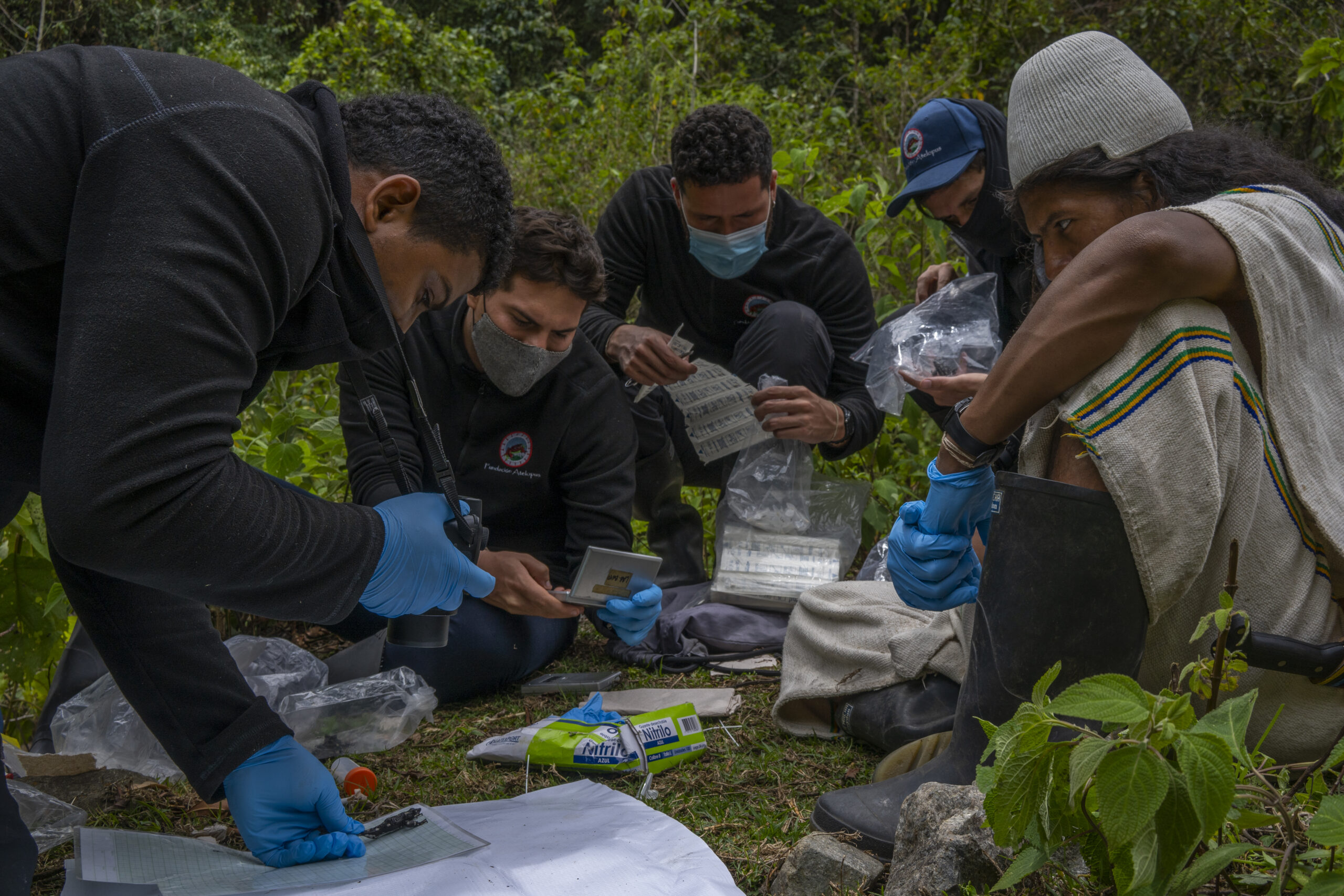
Key actions are to assess and monitor the population dynamics and threats to endemic species of harlequin toads, and to design and develop conservation strategies with local communities. In 2025, ICFC’s partner Fundación Atelopus conducted expeditions in San Pedro de la Sierra (4) and the indigenous community of Sogrome (4), to collect demographic data on the Santa Marta harlequin toad and the Starry Night toad. A total of 109 individuals of the Santa Marta harlequin toad were recorded in San Pedro and 93 individuals of the Starry Night toad were recorded in Sogrome. The data and subsequent analysis showed that these populations are stable although, their equilibrium is ‘fragile’, given that a single stochastic or anthropogenic event could severely impact the populations. The second half of 2025 and first half of 2026, marked the first semester of the implementation of ecological restoration activities in the communities of San Pedro and Sogrome. To this end, project staff worked with locals on nursery production related activities, including seed collection, seedling management, transportation of seedlings, irrigation, and pest control. In total, it’s expected that the nurseries will produce around 4,000 native seedlings annually at each of the project’s restoration sites in both San Pedro and Sogrome. In terms of environmental education, fun interactive games were held at rural schools in San Pedro and Sogrome. Through these activities, students learned to recognize the names and the ecological importance of the most iconic, endemic and Critically Endangered amphibian species in their communities and in the SNSM. As part of the project’s legal compliance and operational sustainability component, Fundación Atelopus recently announced the successful renewal and official approval of its research permit by the National Environmental Licensing Authority (ANLA). The resolution provides legal and administrative authorization for an additional five (5) years—ensuring the continuity of field research activities—and opens a new chapter for Fundación Atelopus in terms of expanding the scope of its scientific and community work in the SNSM. This five-year permit renewal represents a significant vote of confidence for Fundación Atelopus’ research, conservation, and community work in rural areas of the SNSM.
Location:
The Sierra Nevada de Santa Marta in the Caribbean region of Colombia

Size of Area Involved:
2,520 km2 (about half the size Prince Edward Island)
Project Field Partner:
Our Investment to Date:
Cost (2021-2025): CA$233,450
Budget in 2026: CA$67,782
Gallery


Similar Projects
Deploying strategic security and technology to save rhinos
Find Out More
Mali Elephant Landscapes – Paysages des éléphants du Mali
Find Out More