
John Meisner, Author at Biome Conservation

COP30 in Brazil draws attention to the compelling case for preserving tropical forest

By: Anne Lambert, Founding Director

As usual, The Economist, in its October 23rd leader (editorial), puts it succinctly:

Chopping down rainforests is daft. The social costs of clearing a typical patch of Brazilian Amazon are perhaps 30 times the benefits of rearing cows on it, by one estimate from 2023. The problem is, those costs, which include aggravating climate change, are spread across the entire world’s population, whereas the profits from cutting down the trees go to the men commanding the chainsaws. Somehow, the world has to find a way to make conservation pay.

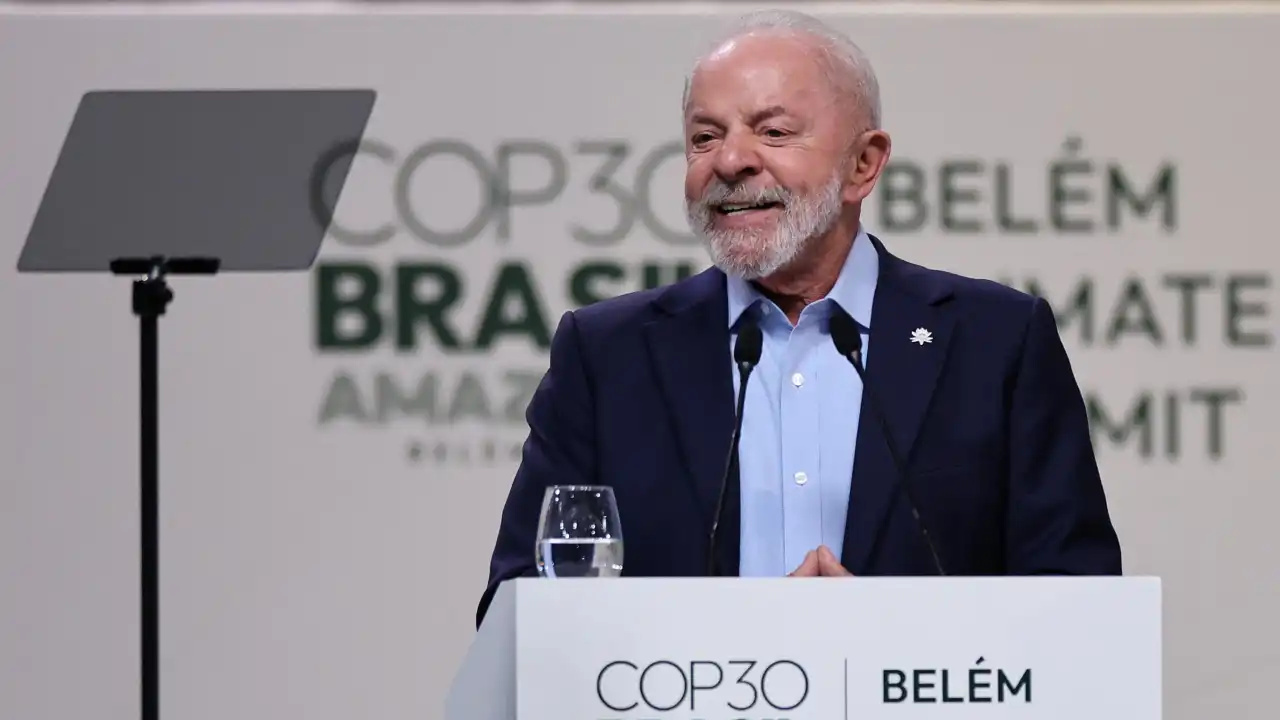
As representatives of the world’s countries meet in Belem, Brazil, for the latest climate summit, what are called nature-based solutions are competing for attention with technological and demand-side solutions that combat accelerating climate change.

We, at Biome, say: it’s about time! Nature-based solutions are highly cost-effective and work both by lowering emissions (notably from deforestation and farming practices) and measures to withdraw more CO2 from the atmosphere. Tropical forests offer the largest potential—they are extensive, and 95% of deforestation is occurring in the tropics—while peatlands and mangroves offer exceptional value per unit area. Tropical forests also generate rainfall needed for agriculture over a wide geographic area. And natural ecosystems supply pollinators for food crops, seafood, livelihoods, and homes – biomes – for the Earth’s ten million or so species.

An article in the same issue of The Economist cites a surprisingly high figure of $40,000/year for the value provided per square km of standing Amazon forest. This is the theoretical value, and not what the world has been prepared to pay. In any case, that figure says Kayapo lands alone provide a value of $3.5 billion annually! This is orders of magnitude greater than the cost of the Kayapo Project – the very thing that is keeping that forest intact, thanks to the Kayapo people and their international partners (led by Biome).
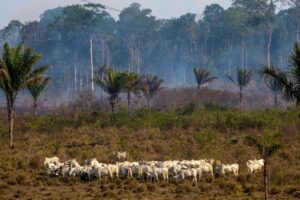
Cattle graze with a burnt area in the background after a fire in the Amazon rainforest near Novo Progresso. Photo by Joao Laet

At the COP, Brazilian President Luiz Inácio Lula da Silva has begun pitching a new multibillion-dollar fund to protect tropical forests. Called the Tropical Forests Forever Facility, the fund will reward countries that succeed in halting deforestation, channelling up to (US) $4 billion a year to as many as 74 nations. Countries conserving their forests will receive $4 per hectare per year, adjusted according to verified performance using satellite monitoring. Seed money will come from investor countries contributing to a blended investment mechanism where dividends are shared between investors and forest nations.

Will governments listen? Will they back this new fund or other measures to preserve tropical and restore ecosystems? We hope so. Regardless, conservation philanthropy continues to play a much-needed role in tackling conservation priorities. To our donors, I say that means you and us: Biome, our field partners, and our supporters.

We are now Biome

After 17 years as the International Conservation Fund of Canada (ICFC), we are entering an exciting new chapter with a new name and look: welcome to Biome Conservation. 

While our new name and brand represent an exciting transformation, our mission remains the same. Biome Conservation is about better communicating the breadth, clarity, and ambition of our mission to save biodiversity in priority areas worldwide. For nearly two decades, our donors have trusted us alongside our field partners to deliver direct conservation impact in some of the most biodiverse and threatened places on Earth—leading to spectacular results.  

Why Biome? 

A biome is a vast, interconnected ecosystem defined by climate, geography, species, and the communities that steward it. From high-altitude cloud forests to coastal estuaries, these large ecological systems reflect the scale at which we work, and the global reach of our partnerships. 

Therefore, our new name captures the spirit of what we’ve always been about: protecting nature’s great living systems by supporting effective, locally led conservation. It allows us to communicate more clearly, connect with new audiences, and strengthen our efficient, non-bureaucratic movement to stop biodiversity collapse on Earth. 

[IMAGE CAROUSEL] 

What isn’t changing 

While our name and identity have evolved, the heart of our mission remains the same. 

  • Our team, partners, and projects are unchanged. 
  • Our commitment to protecting biodiversity, climate resilience, and community-led conservation is unwavering. 
  • Our values—trust, transparency, and impact—continue to guide everything we do. 
  • International Conservation Fund of Canada remains a legal name, along with Biome Conservation, which is a “doing business as” name.  Both names are valid for banking, legal agreements and wills.  

What this means for you 

If you’ve supported ICFC, your past, present, and future support continue seamlessly. Donations, pledges, and planned giving remain valid under our original name, which will continue alongside Biome Conservation as our legal identity. Cheques, tax receipts, and charitable status are unaffected. 

Looking ahead 

As Canada’s most efficient conservation organization, we’re proud of what we’ve achieved as ICFC and excited about what lies ahead as Biome. The challenges facing our planet are immense, but together—with you, our field partners, and communities around the globe—we know we can protect the natural systems that all life depends on. 

This rebrand is not a departure—it’s an evolution. A clearer identity for the same trusted mission. 

We invite you to explore our new look, share in our renewed vision, and continue this journey with us. Because protecting nature’s great living systems has never been more urgent—and we are making a significant difference. 

Welcome to Biome. 

Site By Slate